

What Is White Noise & What’s All The Fuss About?
What is white noise? How is it created? Can it really help you sleep, and why do babies find it relaxing?
This article will look into all of these questions and more to help you understand the origins and uses for this seemingly annoying sound.
A sound you usually hear when you don’t have reception on your television, or there is no signal on your radio. A sound you would normally try to get rid of as quickly as possible.
So why is that some people actively seek out the best quality white noise? And why is there a whole industry built around white noise machines?
To understand why people would want to listen to it, let’s first take a look at exactly what white noise is.
What is white noise exactly?
The term ‘white noise’ is actually used in several different contexts. For the purpose of this article though, we will only be looking into white noise in terms of audio – the most common context.
It’s helpful to look at the name itself to start with. White noise gets its name from ‘white light’. In simple terms, white light is all colors, or frequencies of color, combined together.
In a similar way, white noise is so called because it is a combination of all the different frequencies of sound we are able to hear.
The white noise we talk about is not usually every possible sound put together though.
White noise is the signal, or frequency, created when all the different frequencies of audible sound that the human ear and brain can perceive are put together at a similar level.
The sound of white noise we hear as humans therefore is the sound of all the frequencies between 20 and 20,000 HZ.
So we are literally hearing around 20,000 different tones of sound all at the same time. No wonder it sounds messy…
If you think about it this way – imagine you are sitting in a quiet restaurant. You will be able to pick out the individual voices of your dinner companions, and also those of the few other people there.
But now imagine you are in a sports stadium waiting for the game to start – there may be thousands of people all talking at the same time, and it will sound like a blurred roar.
White noise has a similar effect – you are listening to so many different tones all at the same time, it blurs into that ‘hissing’ or ‘shushing’ sound.
This is also why the sound of rain, wind, waterfalls or oceans can be found on white noise machines – there are so many different tones created by those forces of nature, that it becomes similar to white noise found on a television, radio or created in a studio.
What is pink noise?
The simple explanation is that pink noise is a variation of white noise which sounds deeper, and with less of a high-pitched hissing.
The more complex explanation revolves around why white noise sounds high-pitched in the first place.
The reason is because each octave contains twice as many frequencies as the one below it. So for example between 100hz and 200hz there are 100 distinct frequencies.
But between 200 and 400 hz there are 200 frequencies. So by the time you get to 20,000hz, there are many more frequencies than there were at the lower end of the range.
When pink noise is created in a sound lab, the sound engineers will usually reduce the volume of each successive octave to compensate for the extra frequencies.
This balances the sound out by giving more ‘energy’ to the lower octaves, and gives it a ‘deeper’ sound overall than white noise.
What is brown noise?
Brown noise, sometimes called Brownian noise, sounds even deeper than pink noise, and considerably deeper than white noise. It often sounds like rushing water – like a waterfall.
It is not named after the color brown, but after Robert Brown, who discovered Brownian motion. This is because the signal is produced by the random pattern of particle movements.
Brown noise can be produced, but not the same way as white noise or pink noise, and is much harder to create. It involves the sound engineers using each sample to create the next one with an element of randomness introduced to the previous sample. It’s complicated…
Can brown noise make you lose bowel control?
Contrary to legend, brown noise should not make you lose control of your bowels! The legendary ‘brown note’ is supposedly an infrasound frequency that makes people lose control.
However, experiments have been done by scientists, the military and in documentaries showing that there is no ‘one frequency’ that works on all people.
Yes, some people may react badly to the resonance of certain frequencies, but there is no one sound you can create to make masses of people all run for the toilet…
What it white noise useful for? (and pink and brown…)
Because white noise contains all audible frequencies, its most common use is to mask unwanted sounds. This can be very useful in certain circumstances.
Most people find that they easily get used to the noise and don’t find it disturbing. It literally fades into the background, and takes other external sounds with it.
So who might find it useful, and in which situations?
1. Helps you sleep by blocking out disturbing sounds
For light sleepers who are easily kept awake by external sounds, listening to white, pink or brown noise at night can help block out these sounds.
So if you have trouble falling asleep because of the sound of traffic, or a television someone is listening to, then white noise can stop you hearing the sound in the first place.
White noise contains all audible frequencies, so your ears are overloaded with sound and are not able to pick out the other sounds that would normally disturb you.
You need to have the white noise loud enough for this to work completely though. Otherwise it will help mask other sounds, but not hide them altogether.
The other theory behind why white noise helps you sleep is that your brain is incredibly active and loves stimulation. So any noise in the night will engage your brain.
Having a constant white noise will therefore satisfy your brain’s need for stimulation and prevent it from getting over-excited when it hears sudden noise in the night.
You can also experiment with different kinds of white noise. If the sound keeping you awake is a deep traffic noise, then maybe try pink or brown noise instead as they have more strength at the lower frequencies.
And if ‘pure’ white noise is just not relaxing enough, you can always try listening to rainfall, oceans, wind or other white noise sounds from nature.
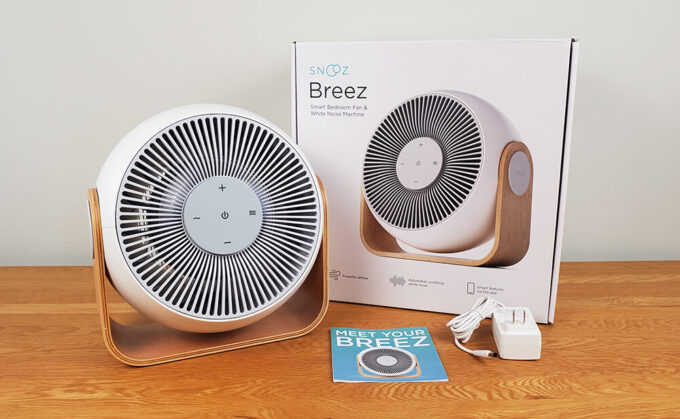
You can even buy purpose built white noise machines which have the option to play pure white noise, or different sounds from nature.
2. Helps babies to relax and sleep better
Babies are easily kept awake or woken up by sudden sounds. White noise can help to drown out these sounds and keep them sleeping for longer.
And babies are already accustomed to listening to constant noise – the womb is not a quiet place, and white noise is similar to the sound of blood rushing by in the womb!
So babies often find white noise, or nature sounds, relaxing – during the day or at night.
3. Can help you concentrate – for a while
While writing this article, I have been listening to pink noise constantly. I can hear the sound of traffic quite loudly from where I work, and the pink noise completely drowns it out.
This stops me from being distracted by changes in the volume of traffic, loud motorbikes, trucks and beeping horns.
I find it is very effective and I am so used to the sound now that as soon as I put it on I feel focused, and it fades nicely into the background. I am always very surprised how loud the traffic is when I turn off the pink noise again!
It is also sometimes used by people who work in other kinds of noisy environments, such as manufacturing or where there is a drone of technological devices.
However, despite my own positive experience with white noise, some studies have shown that listening to white noise constantly to aid concentration can have a negative impact on your performance, stress levels and memory.
Other studies have been done to see if white noise can improve the concentration of children with attention difficulties. It appears that it does in some situations, but also decreases the performance of children who don’t have attention problems.
Overall it seems this is still a developing area. My personal experience is that listening to white noise is better than listening to the drone of traffic. But perhaps after a few more days or weeks, it will start to irritate me.
4. Eases the annoyance of tinnitus
I can also personally attest to the theory that white noise helps ease tinnitus. Having had chemotherapy for cancer treatment 2 years ago, a permanent side-effect of the Cisplatin drug I now have is tinnitus.
Especially bad at night time, or if I am tired, ill or stressed, I find that white noise in any form – pure or sounds of nature – helps to block out the ringing I will hear from tinnitus.
This then makes it easier for me to relax and fall asleep, as I am not being annoyed by the changing of tones that my tinnitus has.
5. Promotes relaxation
Whilst pure white noise like that heard on your television isn’t usually thought of as relaxing, nature sounds often are. There are many soundtracks created either by recording sounds from nature or synthesizing them – and for good reason.
People find the sound of oceans, rivers, forests, waterfalls and rain – to name just a few – calming, relaxing and peaceful. It may not be for everyone, but most people will state that one of the joys of being in nature is listening to the sounds.
So the next time you are feeling stressed, why not have a listen to the sound of an ocean or waterfall and see if it helps you unwind.
Where can you find the best white, pink and brown noise?
There are many different options for listening to white noise. The easiest way is to just turn your television to an un-tuned channel, or turn your radio to a frequency with no signal.
You can also get white noise machines – designed to play white noise or nature sounds. And you can find CDs or MP3s with high quality recordings.
There are interactive websites that create it for free. To find out the best sources for all of these options, have a read of this article: the best sources of white noise.
Author: Ethan Green
The Best Sources Of White Noise Online: Generators, MP3s And CDs
Listening to white noise is fast becoming a popular way for light sleepers to deal with both masking external sounds and also helping them relax.
It’s also great if you have trouble concentrating while working or studying.
So where is the best source of white noise online?
You have several options when it comes to getting hold of good quality sounds, and we will discuss each of the following to help you choose:
1. White noise MP3s you can buy and download
2. CDs you can listen to
3. Free white noise online – produced by an online generator that you can play with
4. Purpose-built white noise machines
1. White Noise MP3s
This is easily how you can access the greatest choice of relaxing sounds to listen to.
If you don’t want to buy a special machine to produce the sounds you like, then buying and downloading white noise MP3s is our recommended option.
MP3s take up less space on a computer or audio device and are quick to download once you’ve bought them.
You can then play them through your computer or stereo depending on your home audio set-up. You can also easily put them onto an MP3 player or even your mobile phone.
The best source we have found by far is whitenoisemp3s.com. There are many reasons to love Karen Edison’s website and recordings:
- There is a huge choice of white noise MP3s and other soundscapes – for example ‘Autumn winds’, ‘rain on the river’ and ‘healing waves’
- You can listen to every recording before you buy
- They are all produced by Karen, who is a professional composer and sound designer
- There are descriptions of where, why and how every different sound-scape was recorded and created. She clearly cares about producing high-quality recordings and wants you to know the thought process behind each one. We like that kind of professionalism
- She uses cutting-edge technology to create the best quality white noise MP3s and sound-scapes we have heard anywhere online
- There is a 60 day money back guarantee if you are not happy
The White noise MP3s and Sound-scapes typically last for around 60 minutes. They cost $9.99 and you can pay through a secure system. If nothing else, we recommend checking out Karen’s website anyway as it is very sleek, well designed and a cool site to visit.
2. White noise CDs
If you are a fan of music you can actually hold in your hands, then there is also a wide range of good quality white noise CDs available.
The benefit also being that you can pop the CD into any player. So if you want to help your baby or child get to sleep, you can easily play the CD in their bedroom. And of course you can do the same for yourself!
Best CD recording of actual white noise
Our favorite is Pure White Noise – pictured to the right here. It contains a 74 minute long recording of pure white noise, perfect to leave playing while you fall asleep or try to concentrate on work.
It is a high quality recording, and the consistent sound will help to drown out all but the loudest of noises coming from inside or outside of your house.
Whether you need it to help you relax and fall asleep, or just to concentrate better during the day, then it will definitely help with both jobs.
Best CD with sounds from nature
If you prefer to listen to sounds of nature, then there are also many options available to you.
We particularly like Healing Sounds of Nature – Thunderstorm, Rain and Ocean Waves.
This CD comes with 2 tracks, each just over 30 minutes long:
- A majestic tropical thunderstorm
- Ocean waves, gentle thunder and rain
The recording quality and sound production is excellent, and the choice of 2 long tracks gives you some variety, but still enough time to fall asleep listening to the same track.
The second track is particularly relaxing to listen to. Something about being tucked up in bed listening to both the sound of waves and thunder makes you feel very cosy.
3. Free online sources
You can find some great free white noise online generators which range from the simple to the entertainingly interactive.
There are definitely some good reasons to use a white noise online creator:
- It’s free!
- You can interact with it to find the exact sound you need to block out external noise and to help you relax
- You can have it playing through your computer while you work to help you concentrate
But as always, there are some reasons why it might not be the best long-term option, especially if you want one to help you sleep:
- The sound quality is usually not as good as a professionally made MP3 or CD
- Do you sleep in the same room as your computer?
- Do you want to leave your computer on all night?
Even though there are better options for listening to white noise, or relaxing sounds from nature, the free white noise online generators can be fun to play around with. And the level of control you have over the sound is a bonus in some situations.
With so many different websites coming offering them nowadays, these are our favorite free online white noise players from the many we’ve tried out:
Best online creator
Our favorite online player which focuses on white noise alone is simplynoise.com for the following reasons:
- It is very easy to use, with simple and smooth buttons to play with
- You can quickly choose to swop between white, pink and brown noise
- The sound quality is good
- You can adjust the volume and even set it to oscillate
- There is an in-built sleep timer
Best online sound mixer
If you like the idea of playing around with different sounds from nature to create your own sound-scape then try out the mixer hosted by soundsleeping.com.
Ok, so it’s not technically an online white noise maker due to the obvious absence of being able to choose white noise! But it does have many fun options:
- You can put together a selection of any 5 sounds from the menu, and adjust the volume and pannning of each
- There are more than 35 sounds to select – so there are endless combinations
- They have 4 different binaural beats to choose from
- The loops are not too short – so you don’t hear thunder every 2 seconds for example
- It is easy to use
4. White Noise Machines
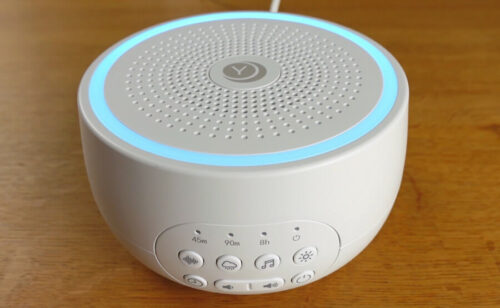
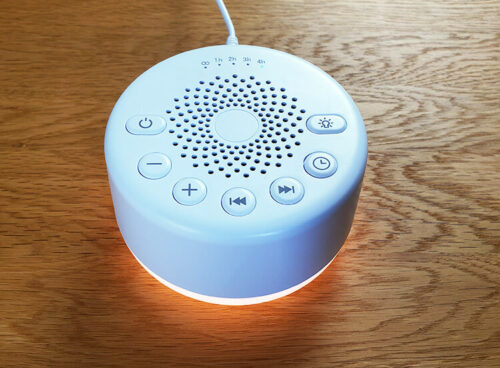
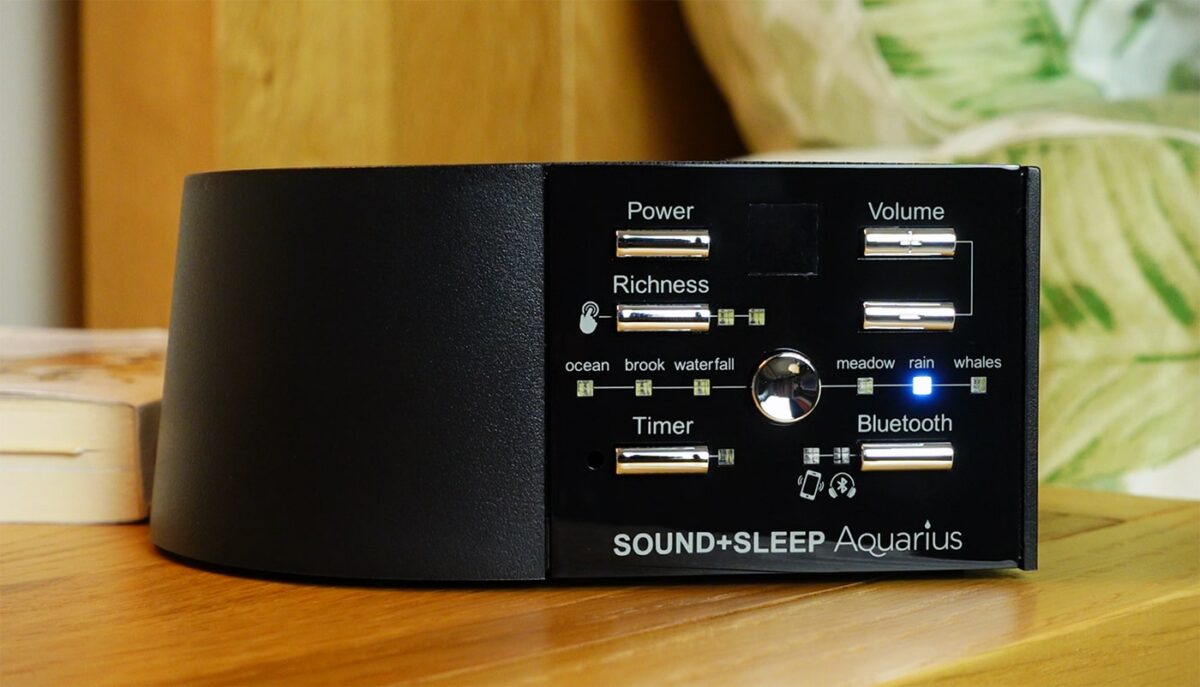
There is a lot of choice when it comes to buying a sleep sound machine to have on a bed-side table.
You can find machines for around $50 that produce the purest of sounds by controlling the flow of air that goes through the device. This is the most authentic way of listening to white noise.
You can find expensive models for around $90 which have 10 different sound-scapes to choose from. They usually come with clever features such as automatically turning the volume up if they pick up an increase in external sound.
And you can of course find lower-price models between $17 and $30 – some of which are actually quite good.
We tested and reviewed the most popular models. To find out more, check out our white noise machine reviews.
So there you have it – our breakdown of the best sources of white noise online. Whether you want to listen to a free player, buy sound-tracks or an actual sleep sound machine is up to you of course.
There is a big difference between a free player on the internet and a $95 piece of technology to sit by the side of your bed. There is also a big difference between the sound quality, functionality and effectiveness at helping you sleep, relax or concentrate.
We hope this review helps you work out what is right for you, and points you in the direction of the best sourses of white noise and relaxing sounds from nature.
Enjoy!
Author: Ethan Green
Lack Of Sleep Affecting Academic Ability – Is Technology To Blame?
When I was a kid, the best I could do to stay up later at night was to read a comic book in bed with a torch.
As much as I loved the secrecy of it, I would soon get bored or sleepy, put them to one side and drift off.
But kids today have a whole world of excitement at their fingertips.
Portable video games consoles. Televisions in their rooms – with some seriously cool, but addictive games consoles attached. Mobile phones – with increasingly amazing games on their tiny little screens. Text messaging. Facebook. MySpace. Massive Multiplayer Online Roleplaying Games. And the list goes on…
I’m 35 and I love some of the above, so I can easily understand why kids are so into them!
Researchers, teachers and parents alike have long been concerned that kids are using technology too much, and often too late in the night.
They worry about the impact on their school work. Their health. Their social lives (even if many kids do see their online friends they’ve never met as an important part of their social lives)
International study shows sleep deprivation is affecting school work
The BBC news website recently reported a large international study which seems to back up some of these worries.
Boston College carried out the important study which is used to compare international educational standards in more than 50 countries by analyzing the performance of over 900,00 school children.
But in this study for the first time they also collected data on other factors such as sleep and nutrition. They then compared the test results of the children with interviews of parents and teachers about the other factors.
They found a wide range of differences between countries in terms of how sleep deprived the children performed on average.
What the study showed
The study found that on average, richer countries had greater numbers of sleep deprived children. The United States had the largest percentage of sleep deprived children; 73% of 9 and 10 year olds, and 80% of 13 and 14 year olds.
When you compare this to the international average of 57% and 47% respectively, you can see a large difference.
The researchers at Boston College stated that increased sleep deprivation corresponded with worse results in the maths, reading and science tests.
The researchers then found that the problem seems to snowball when more children in a class are sleep-deprived.
They found that teachers felt the need to make classes easier so that the more sleep-deprived children could cope with the standard. So all the children would then receive an easier education.
While there were some exceptions to the idea of the richer countries being more sleep deprived, and also exceptions to the rule of more sleep deprived children doing worse in the tests, overall the correlation is strong.
The reason children perform worse academically when sleep deprived
Sleep is vital for the brain to function at full capacity. If children are tired, then important functions are affected which can affect their academic ability:
- Concentration levels are lower
- Memory is impacted – both the ability to form new memories, and the ability to recall information
- Problem solving is affected – particularly solving difficult problems, as recent research also showed
- The ability to comprehend new ideas and theories is reduced
So what is causing the sleep deprivation?
The researchers at Boston College do not state why children are so sleep deprived, particularly in the richer countries such as the United States.
But it is no secret what sleep specialists, doctors, teachers and parents think is a major factor. And children themselves will often admit to the reasons they are up late into the night.
Going back to the list of technological devices that children have at their fingertips, why exactly do they keep children up at night? Well, there are several possible reasons, and combination of reasons:
Just can’t stop…
The simplest explanation is when children are either allowed free control over their ‘toys’, or when they still play with them when told not to. It can be really hard to stop yourself playing games, texting friends, checking Facebook etc.
Many grown adult have this problem, so why should we expect children to have any better level of self-control?
Add to that the fact that many children, especially teenagers, naturally have a body clock which goes to sleep and wakes up later. So the ability to stop when you are not feeling tired just because you know you should is lost on many children.
Addictive nature of some technology
Modern computer games are incredible. And what’s more, many of them are designed in such a way that can make them very hard to put down.
Have you ever asked a child just how important it is to them that their character is just as high a level as their friends are? Or that they have an equal number of achievements or scores in a game?
I know because I have spent nearly 30 years playing computer games. I know that putting down PacMan was much easier than resisting getting my character to the next level on World of Warcraft. And even PacMan was at time hard to stop playing!
The 8 year old me got bored of that game much sooner than the 30 year old me used to do with Warcraft. Thankfully I beat that addiction by taking my own advice a while back!
The social life
People who don’t use technology struggle to understand how fulfilling a social life it brings some children and adults. Whether it is staying in touch on Facebook, chatting by text or other social media, or working together with new friends online to defeat the latest boss in a computer game.
Children need to feel secure in their social circle, that they have friends and are liked. So the feeling that they are missing out, or not being there for someone else, or not being cool can be a strong driver to stay up late at night.
The impact of light from screens
When children hold screens close to their face, the light can be intense enough to have a similar effect as sunlight. This can make your body and mind think it is daytime, and therefore not time to sleep.
This effect can even make it hard to fall asleep after they turn off the screen because the light has already sent the signals to the internal body clock that it is day time.
What can parents do about it?
The first thing is to lead by example and to develop a house-wide practice of having quiet, no technology time at the end of the night. If children see you using a laptop or watching TV in bed, then they are going to think it is normal.
It is a parental choice as to how strict to be with having technology in the bedroom and enforcing it. But the best advice would be to have a limit to the amount of time that can be spent on computer games especially.
Encourage children to do something relaxing in the last hour before bed. And by relaxing we don’t mean designing their avatar’s latest outfit online…
The Boston College researchers did state that the effect of sleep deprivation on study can be reversed. So the sooner you can get your kids back into a stable sleeping pattern, then sooner they can perform at their academic best again.
Other factors
Of course it may not always be technology to blame, and not entirely either. As parents, you need to be keeping an eye out for any other factors which can contribute to poor sleep in children.
Factors such as diet, exercise, stress and other health issues can all play a role to name just a few examples. So don’t be too hasty to pin the problem on computer games completely and ignore all the other factors which could contribute to poor sleep.
Yes technology may play a big role, but sleep is complex. And so are children.
Author: Ethan Green
Why Am I So Tired All The Time? 12 Possible Reasons
Our daily lives seem to get busier and busier. Our minds too. To get through our days we need to feel refreshed, rejuvenated and with a full tank of gas in our bodies when we wake up.
But if you are waking up in the morning and having a relationship with your snooze button, and constantly asking yourself ‘why am I am so tired all the time?’ then something is clearly not right.
But is it just a lack of sleep that can lead to this musing over your own energy levels?
Not necessarily. There are many possible reasons why you might feel tired all the time.
It is important to work out whether your fatigue is caused purely by a lack of sleep, or if something else is Behind it.
Let’s take a look at some possibilities and see if there is anything that jumps out at you.
1. Not getting enough restorative sleep
This is of course the most obvious choice of candidates causing you to ask ‘why am I so tired all the time?’. The word restorative is important because there is a difference between just being in bed and getting some sleep, and having enough good quality sleep.
There are many different kinds of sleep disorders – more than 80 in fact. Some of these can lead to you seemingly getting a reasonable sleep, but actually having quite disrupted or poor quality sleep.
You can take a look at our list of sleep disorders which have brief descriptions to help you discover if you think any may apply to you. But really a doctor is the best person to assess you for a sleep disorder.
Sleep apnea is one of the more common sleep disorders which can leave you feeling constantly tired. If you or your partner notice any breathing difficulties at all during your sleep, you should get it checked out.
Secondly, are you actually denying yourself the right amount of sleep? Most adults need between 7 and 9 hours sleep a night. But many of us try to be super heroes and survive on much less.
Especially with work, family and leisure commitments eating into sleep time. Have a look at our article on attitude to sleep to give you some ideas about how to reclaim that precious sleep time.
2. Depression
Depression not only affects your emotional state, but can have a significant impact on your physical state. Some symptoms of depression include loss of appetite, headaches, muscular pains and fatigue.
The loss of appetite can then again contribute to further problems with a lack of energy and feeling tired all the time.
Moreover, depression often goes hand in hand with anxiety, worrying and over-thinking. These can all be major factors in not falling asleep at night. Being able to switch off your mind is important in falling asleep. If you have issues with turning off your thoughts at night, have a read of our relaxation exercises for sleep.
3. Heart disease
Your heart is the engine driving your body. If it is not in top condition, then you will be left feeling more tired than usual when doing everyday tasks.
If you are finding it a struggle to do simple tasks like walking up and down stairs, doing housework or shopping then it could be a sign that your heart is struggling.
Make sure you seek medical advice if you are concerned about this.
4. Diabetes
If the heart is the engine driving your body, then sugar is one of the main fuel sources. People with diabetes have a problem with the body keeping the sugar in the bloodstream instead of being converted into energy in the body’s cells.
This can then result in extreme fatigue when the body has no energy left to function. If you feel tired all the time, then you can always ask your doctor to perform a simple blood test to discover if you have diabetes.
Diabetes can be controlled, and it is important to catch it as early as possible to hold off the more long-term damage it can cause the body.
5. Underactive thyroid
The thyroid is a gland in your neck. It is responsible for your metabolism, which is basically the speed at which you convert food and liquid into energy for the body.
If it is underactive, then your metabolism will be considerably slower. The result of this is that you may feel tired a lot, as well as experience other effects such as weight-gain.
You can have this tested by a doctor, and like diabetes it can be managed with medication.
6. Chronic Fatigue Syndrome (CFS) – or Myalgic Encephalopathy (ME)
If you find yourself asking ‘why am I so tired all the time’ over many months, then it may be that you have Chronic Fatigue Syndrome, sometimes known as Myalgic Encephalopathy. CFS or ME for short.
The principle symptom of this is extreme fatigue which remains an issue and has no other identified cause.
It is not easy to treat, and relies heavily on the sufferer taking action to alter their daily routines and lifestyles.
Unfortunately something which people have trouble motivating themselves to do because they feel so tired all the time – a vicious circle that can be hard to beat.
For more information about this, you can visit the excellent UK site of the ME Association.
7. Urinary Tract Infection (UTI)
This medical condition is usually associated with a terrible pain similar to a burning sensation, and a more regular need to urinate.
However, sometimes this symptom is not present, and instead the only clue is feeling unusually tired a lot. A doctor will normally treat this with antibiotics and the tiredness should dissipate soon after.
8. Intolerance to certain foods
Many people have an intolerance to certain types of food. How many more people these days are discovering that they cannot eat or drink dairy products?
If you have an intolerance to certain foods, the result of eating them can be excessive tiredness afterwards. You can ask a doctor to help you eliminate the correct foods.
But also you can experiment yourself to work out what food types are causing you to feel tired after eating them. Try cutting out certain types a few days at a time and see if you notice the difference.
As long as you keep a sensible, balanced diet while doing this, there should be no harm in experimenting.
9. Poor diet
There are 2 main issues here which you could experience:
- Simply not eating enough. You could be on a diet, experiencing a lack of appetite, too busy to monitor your diet, away from home, traveling, feeling bad about your image, struggling to pay for the ever-increasing weekly shop. There are many reasons why people sometimes don’t eat properly. But it is essential to keep your body and mind happily fueled to see you through your days. Don’t skimp on the meals!
- Your choice of food can also play an important part in your energy levels. It is important to try to keep a balanced energy-intake throughout the day. So for example, eating healthy low-GI breakfasts instead of high-sugar cereal. Avoiding sweets and cakes in the afternoon, but reaching for fruit, nuts of yoghurts to avoid a sugar ‘crash’ mid afternoon. If you are asking ‘why am I so tired all the time’ then the answer could possibly be because you are eating too much sugar and constantly crashing and burning.
In addition to this advice, there are certain food types which are great to consume if you want to boost your energy levels and keep your body stocked with all the vital vitamins and minerals it needs. For example:
- Green leafy vegetables – great for energy boosting vitamins and minerals
- Vitamin B12 – found mainly in animal products, but also nuts and soya for example. Lack of B12 can also lead to fatigue
- Folic acid – again found in leafy greens, but also eggs can increase energy levels
- Potassium – a good source is bananas, which incidentally makes a good bed-time snack!
- Make sure you have a good mix of vegetables, fruits, grains and pulses in your diet generally and you will be on the right track
10. Anemia
Anemia can lead to you feel tired all the time because your body is not getting enough oxygen. Anemics have less red-blood cells in the body, meaning less oxygen gets transported around the body to keep your organs, muscles and tissues functioning at maximum potential.
Anemia is easily diagnosed by a doctor, and treatment will depend on the exact cause. For many people the cause is iron deficiency, which can be combated by taking supplements or eating foods rich in iron such as meat or leafy green vegetables
11. Too much exercise…
A common piece of advice for people struggling with energy levels is to make sure they try to do exercise regularly because it can help boost energy levels.
If you try to do 30-40 minutes exercise 4 times a week, then after a few months you should see a considerable boost to your overall energy levels.
It seems odd that by expending more energy, you will get more energy overall, but it really does work!
But for some people, they end up at the other end of the spectrum, and exhaust themselves with too much exercise. Over-training can be a problem for people doing extreme amounts of exercise, particularly exercises like weight training, long-distance sports and martial arts for example.
If you are training a lot, it is important to make sure you give yourself rest days and keep to a very healthy diet.
12. Lack of water
Around 60% of our body is made up of water. Water is essential to life, yet many people neglect to drink regular fluids throughout the day. Not getting enough water during the day can lead to headaches, muscular problems, concentration and memory problems, and yes – you got it, feeling tired all the time.
Everyone is different, and working out how much water you need depends on many factors. But the average recommended amount for a man is around 3 liters per day, and a woman just over 2 liters. Have a look at the Mayo Clinic’s guidance on water consumption for more information about this.
So in conclusion, there are many possible factors that have led to you asking yourself ‘why am I so tired all the time?’. The truth may even be that more than one factor is causing your fatigue.
The best thing you can do is to try to get a good amount of sleep and adopt a good diet and lifestyle – including doing some exercise if you don’t already.
If you are concerned, then you can consult a doctor to see if you have a sleep disorder or any other illness, mental or physical, which may be undiagnosed.
Author: Ethan GreenCatathrenia – Are You Making Strange Noises While Sleeping?
Just when you thought you were dropping off to sleep, your partner irritably shakes you awake. A conversation along these lines takes place:
‘You’re making those weird noises again!’
‘What noises?’
‘You know, with that horrible groaning sound that goes on for ages. I can’t sleep with you doing that…’
If this sounds familiar, then it may be that you are suffering from catathrenia.
What is Catathrenia?
Sometimes known as nocturnal groaning, catathrenia is a rare sleep disorder which falls under the category of parasomnias. Parasomnias are most basically defined as strange night-time occurrences. And the sound made by catathrenia sufferers in their sleep can be very strange indeed.
People who have catathrenia will typically breathe in deeply while sleeping. They then hold their breath for a short while. Then emit a long groaning, moaning or shrieking noise which can last from a few seconds up to a minute. At the end of the groan will be a secondary noise like a snorting, or the person might also wake up.
The noise made can be very loud, and for some people can even strangely sound like a sexual noise. This of course can be quite disturbing or annoying for other people in the household who can hear it.
Catathrenia usually occurs during the Rapid Eye Movement (REM) stage of sleep. Though it is possible for it to happen during other stages. Most people report it happening later in the night, which mirrors the fact that there is more REM sleep later on during sleeping.
People who have catathrenia will usually experience it for many years. And during this time will in many cases experience it most nights. And unless their partner is one of the lucky few people who can sleep through any noise, they will also experience it second hand!
What Catathrenia is not:
Catathrenia could be confused for other sleep disorders or heath issues. So it is important to understand that it is not any of the following:
- Related to snoring. The easy way to tell the difference is that snoring usually takes place on the in-breath, whereas catathrenia takes place during the out-breath
- Related to exhalatory snoring (yes, this does appear to contradict the first point!). The noise in this kind of snoring is also made on the out-breath. However, the distinction is that only with catathrenia does the person hold their breath after they breathe in
- Sleep apnea. Even though both disorders involve a pause in breathing, there is a difference. With apnea the pause happens after breathing out; with catathrenia, the pause happens after breathing in
- Stridor – which is a potentially dangerous condition where a person lets out a high pitch sound due to a constriction of the airways
- Related to sleep talking. Despite the fact that sometimes people can make a very strange sound, it is not the same as sleep talking
- Moaning as occurs during epileptic seizures
- Related to any other breathing disorder
- Related to any dream states or mental suffering
When diagnosing catathrenia, a medical professional would want to rule out the above possibilities, particularly the more threatening ones like apnea, epilepsy and stridor.
What causes catathrenia?
As with many sleep disorders, the cause of catathrenia is still in debate among the medical and scientific community. There have been various theories put forward, including:
- Obstruction or restriction of the upper airway
- During REM sleep, the vocal chords may partially close off. A forced out-breath then takes place to push through this closure and unblock the vocal chords
- Damage to brain structures that control breathing
- There have also been suggestions it is connected to high stress levels
Unfortunately there is a lack of studies that have been done to work out the exact causes. Since Catathrenia results in more social problems than being medically dangerous, researchers are for the most part focused on sleep disorders which can be harmful.
Despite the lack of consensus as to the cause, it does appear that many researchers believe it is an obstruction or restriction of the airways that causes catathrenia. Because of that, some argue that it should not be classed as a parasomnia, but a sleep-related breathing disorder.
Catathrenia treatment:
Many people do not even realise they have catathrenia until a partner or someone sleeping in their house tells them about the noise. The first step is of course to identify that it is not a different sleep disorder.
Talking with a medical professional or having a sleep study conducted is the best way to make sure catathrenia is identified correctly. You may be diagnosed purely from your history and reported symptoms. Otherwise you may be asked to have a polysomnogram, which is an over-night sleep study.
Following this there are 2 ways of looking at treatment:
- Should the sufferer look at ways to address the problem?
- Should the person who is being disturbed find ways to block out the noise?!
For actual treatment of the patient, it seems either an oral device or a CPAP machine are currently the main options, with surgery also a possibility.
In 2008, a study at Standford University of 7 catathrenia sufferers found that a Continuous Positive Airways Pressure (CPAP) machine helped resolve the nocturnal groaning for all 7 people.
A CPAP machine delivers air gently through the nose to keep the airways open. Interestingly it is normally only used by people who have Obstructive Sleep Apnea.
In that study though, all 7 of the people refused to keep wearing the machine, and most had surgery after the study. The researchers reported that those who did have surgery were cured of their catathrenia.
Since catathrenia is seen as a mild disorder, and more of an inconvenience for sufferers and their families, treatment is not usually rushed, and the least intrusive options offered first.
So the alternative is for people who are being disturbed by the noise to take action. Wearing ear plugs make help in some circumstances, though possibly not for the loudest of groaners.
I have also heard suggestions of using a white noise machine to mask the sound. This is unlikely to work though if you are in the same room. Maybe if you are hearing it from another bedroom in the same house, but not if you are right next to the person making the sounds.
So if you are unable to find ways for you and anyone else living with you to cope, or are concerned that you might have a different sleep disorder, you may find seeking medical advice a good first step.
Author: Ethan Green
The Hypnic Jerk – Jolted Awake When Falling Asleep…
Have you ever woken up with a sudden jolt just as you’ve started falling asleep? Maybe it felt like you were falling. Or that you were having a huge muscle spasm. You may have even felt a small shock sensation, or a bouncing feeling.
Perhaps it was even your partner that was experiencing it, and this in itself startled you back to consciousness.
It could be then, but not necessarily, that you are experiencing a hypnic jerk. You are certainly not alone though; it is estimated that around 70% of people may experience hypnic jerks at some point. I know I definitely have.
Different names
The world of sleep can be confusing, and there is no exception when it comes to the hypnic jerk, as it is also sometimes called to by one of the following names:
- Night starts
- Sleep starts
- Hypnagogic jerk – hypnagogic being a term used to describe the period of time when falling asleep or waking up
- Myoclonus, or myoclonic jerk – technically this is the medical term to describe an involuntary muscle twitch
So what is a hypnic jerk exactly?
A hypnic jerk is an involuntary twitching of a muscle, or muscles (the myoclonus as mentioned above). They usually occur just as you are falling asleep – referred to scientifically as the hypnagogic state of consciousness. This is why they are sometimes call hypnagogic jerks – because you most commonly experience them when falling asleep.
Note that hypnic is also a shortened version of the word ‘hypnagogic’. So you can see why there are all these possible expressions to describe the same thing.
When you experience a hypnic jerk it often causes you to wake up suddenly. When you wake up you may feel like you have just experienced, or are still experiencing, the sensation of falling, spasm, jolting or shock.
Note that the muscle twitching you experience also occurs in other situations. For example hiccups are also muscle twitches.
That strange time of the night
It is during this phase of falling asleep that several unusual phenomenon may taken place. For example we discussed in a previous article the various sleep paralysis stories people have, which often come with bizarre or frightening hallucinations, or even out-of-body experiences.
Luckily there is nothing to be worried about – hypnic jerks along with these other phenomenon are not dangerous. They may be unsettling or frightening, but you do not need to fear going to sleep just because they may happen to you.
What causes the hypnic jerk?
So now you know that the hypnic jerk is a twitching of the muscles. But what causes the muscles to twitch?
As is often the case with the complex world of sleep, scientists are still not 100% certain about this. However, they do believe that the following factors can all contribute to hypnic jerks happening:
- Anxiety
- Stress
- Alcohol
- Caffeine
- Heavy exercise late in the evening
- Sleeping in an uncomfortable position
- Being very tired or fatigued
In addition to these factors which can contribute to the likelihood of a hypnic jerk occuring, there are 2 theories which try to explain why they occur:
1. The first theory is that they happen as a normal part of the nervous system relaxing and slowing down. For example your breathing slows down, temperature drops and your muscles relax. They are then thought to occur because of the muscle relaxation.
2. The second theory is that while relaxing as you fall asleep, your brain gets confused and thinks you are falling, so sends signals to the arms and legs to move to an upright position, resulting in the jerking sensation.
I have read viewpoints that the brain gets so confused it thinks the body is dying, or falling dangerously, and so wakes you with a jolt – but I personally don’t have much faith in that more extreme conclusion!
Make sure it is not another sleep disorder
If you are experiencing what you think are hypnic jerks, then for some people it could be something more serious like Apnea. If you have breathing difficulties when sleeping, or wake up not just with a jolt, but also with a gasp, croak or any other indicator that your breathing was affected, it may be wise to consult a medical professional to rule out Apnea.
A doctor would also be able to rule out the possibility of epilepsy, as a small number of people only experience seizures during the sleeping hours.
It is also possible that you may have restless leg syndrome, or periodic limb movement disorder, which again would be diagnosed by a medical professional or sleep expert.
And most rarely of all, is the possibility of exploding head syndrome, This sleep disorder is also harmless, and is characterized by a very loud noise in your head, which could sound like a bang or any other loud noise, and which wakes you up suddenly.
For the majority of people though, the hypnic jerk is a common and harmless phenomenon.
How can you prevent a hypnic jerk?
The hypnic jerk is such a common occurrence, that it may not be possible to prevent it happening completely. However, you can take steps to address some of the factors thought to increase the likelihood:
- You can cut down on alcohol and caffeine, especially in the 3-4 hours before going to bed at the least
- Try not to do heavy exercise late in the evening or night
- Ensure you are getting sufficient magnesium and calcium in your diet – this can help with muscle and nerve spasms
- Make sure you have a comfortable mattress and bedding, and that you sleep in a comfortable position, even with a partner. Personally I’ve found that I often experience a hypnic jerk when I am cuddling my partner to fall asleep, but not actually lying in the most comfortable position.
- If you are someone that suffers from anxiety or stress, then this is another issue to address altogether. However, you may find some useful advice on the section relaxation exercises for sleep. This provides practical short-term exercises, but also some ideas for more long-term techniques to tackle stress and anxiety.
- Try not to allow yourself to get too tired or fatigued. Obviously this depends on your particular circumstances, as some people understandably have very busy and tiring lives. But it may be up to you to try to give more importance to how much sleep you get. Have a read of the section on attitude towards sleep for some ideas about this.
Avoid the vicious cycle of worrying that you will experience a hypnic jerk
Hypnic jerks can become cyclical if you start worrying about them. This is a very common thing that happens with sleeping difficulties.
For example people who have insomnia will often start worrying that they won’t be able to get to sleep. This worrying then becomes the thing that causes their insomnia, even if the original cause (like noise or temperature) has long gone.
So in the same way, if you worry about hypnic jerks, then you may start to get less sleep and become more fatigued. Being fatigued is thought to contribute to the frequency of hypnic jerks, and so it is more likely you will experience them.
You now know that a hypnic jerk is not dangerous, and that many people experience them. So hopefully you can start to relax about them, and not go to bed thinking about them.
For more ideas about how to change your attitude towards sleep, and particularly falling asleep, have a read of a previous article ‘how to go to sleep instantly, or accept the fact that you can’t’.
What do you think about hypnic jerks?
There is not much research published about the hypnic jerk, mainly because it is thought to be harmless. So I am interested to know what your experience is. How often do you have them? What seems to make them worse or more frequent? What do you find helps to reduce them?
Please share your experiences in the comments box below and help out other readers with your ideas and theories.
Author: Ethan GreenExploding Head Syndrome – Harmless But Disturbing
Exploding head syndrome is a relatively uncommon sleep disorder. It falls under the category of parasomnias, which are most easily understood as strange occurrences that happen during sleep, or while falling asleep or waking up.
It was first documented in 1920 by the scientist Armstrong-Jones, who described it as a ‘snapping of the brain’.
It is mostly experienced by people over the age of 50, though some do experience it in childhood even.
The name ‘exploding head syndrome’ is misleading, as it conjures up all kinds of horror-film images. Fortunately though, people who experience this do wake up with their heads in one piece! To understand why it has such a dramatic name, we need to consider the symptoms:
Exploding head syndrome symptoms:
1. People who experience exploding head syndrome describe hearing a very loud and sudden sound in their head. It usually sounds like one of the following:
- The sound of a bomb
- The sound of gunshot
- A loud clash of cymbals
- The sound of a door slamming
- An extremely loud rushing sound
- People screaming or shouting
- An electrical buzzing sound
- Any other loud sound which cannot be described exactly
2. People do not usually report feeling pain with exploding head syndrome. They may describe it as painful initially, but then reveal it is just extremely loud. They may however be startled, scared or upset when it wakes them up from sleeping or napping.
3. Exploding head syndrome is sometimes accompanied by a sensation of a flashing light.
4. People may feel it affects their breathing – with a gasping of breath, or short lasting difficulty breathing.
5. People may experience a short-lasting episode of sleep paralysis, sometimes taking the form of a reported out-of-body experience.
6. An episode can last for just a few seconds, or even up to a few minutes. They usually occur when falling asleep, or when waking up, but not during the main stages of sleep.
The researcher J M Pearce conducted a detailed study of 50 patients with exploding head syndrome in 1989 to analyze what kinds of symptoms they experienced, which you can read here for further information.
Causes of exploding head syndrome:
The causes of exploding head syndrome are still not properly understood unfortunately. Two theories that have been put forward are:
- Minor seizures in the temporal lobe
- Involuntary movements of parts of the ear, such as the tympanum (the ear drum), or the tensor tympani (the muscle involved in reducing sound – e.g. the sound of chewing food)
J M Pearce in his study was unsure as the likelihood of these explanations. He believed it would be better to class exploding head syndrome with other biological mechanisms that occur when falling asleep. This includes the muscular jerks that most people experience, known either as sleep starts, hypnic jerks, or nocturnal myoclonus.
More recently in 2010, the researchers Thorpy and Plazzi also wrote that they believe exploding head syndrome should be classified as a variant of sleep starts rather than under the category of parasomnias as it currently is.
Treatment:
1. Visiting a doctor is an important first step. Many people feel embarrassed to talk to someone about this due to the strange symptoms they experience. A doctor though will be able to reassure you that it is harmless, and possibly prescribe medication such as clomipramine, which is a tricyclic anti-depressant.
2. Stress is known to be a factor that can increase the frequency and intensity of parasomnias and sleep starts. If you do suffer from stress and need to learn how to relax better, then read our extensive article on relaxation techniques for sleep. You might also want to try an acupressure mat which can reduce stress dramatically and help you fall asleep.
3. Do not allow yourself to become too fatigued. Tiredness is also known to contribute to these kind of sleep problems. So try to keep to a stable sleep schedule. We have plenty of good advice for you here at No Sleepless Nights to help you sleep better. You can always start with our section on good sleep hygiene.
4. It is important to not allow yourself to become anxious about falling asleep, worrying that you will experience exploding head syndrome and that something bad will happen to you. Whilst it is understandably quite disturbing, it is not known to have any damaging effect on you.
Author: Ethan Green
How To Beat Jet Lag – Prevention And Cures
Taking a walk in the sun light is not the only technique to beat jet lag. Moreover it can have the opposite effect in some circumstances.
This article will explain why, and help you work out how to beat jet lag on your specific journey.
Unfortunately it is unlikely you will be able to avoid it altogether. However, there are definitely things you can do to reduce the severity of jet lag. You can also take steps which may help reduce the length of time you experience it.
Steps to take before you travel:
1. Try to ensure you are well rested in the days leading up to traveling. If you work yourself into the ground and travel when exhausted, you may find it takes longer to overcome the jet lag. It won’t help to tire yourself out so much just so you can sleep on the plane!
2. If you are the diligent type, you could try to alter your sleeping pattern before you go. So if you go east, get up a little earlier each day for a few days before. If traveling west, get up a little later each day.
3. Try to do some exercise the day before traveling, or in the morning if traveling later on in the day. Just don’t do strenuous exercise too close to the flight time if you plan to sleep on the plane.
4. Don’t drink alcohol before flying. Alcohol can help you to fall asleep quicker, but then disrupts your quality of sleep. So you may be more tired when you arrive, even if you manage to knock yourself out initially.
Things that help while on the journey:
1. Drink plenty of liquids (not alcohol though!). It is easy to get dehydrated on a plane due to the change in air, pressure and humidity. Drink lots of water and juices if you can. Even though you cannot take liquids into the airport in most places, you can still buy a large bottle of water once you pass through security. You can then take this on board instead of relying on the complimentary drinks, which may not be enough to keep you well hydrated.
2. Bring accessories to help you sleep better. A good eye mask, some ear plugs, and a cosy warm jumper can all help.
3. If you have a long stopover, take the opportunity to walk around and get the blood moving in your body. If there are facilities like a shower, then freshening up may help you sleep on the next leg of the journey if you need to.
4. If you decide to use sleeping tablets or other medication to help you sleep, then think carefully about whether you really need to or not. Melatonin can be useful, and many airline staff use it. It is always good to first check with a doctor if it will be ok for you. Further in the article we also discuss getting the timing of melatonin right.
How to beat jet lag on arrival:
The importance of the day-night cycle
Jet lag falls under under the category of ‘circadian rhythm sleep disorders’. A circadian rhythm is a biological process that repeats roughly every 24 hours.
Sleep follows a circadian rhythm, and is controlled by our internal body clock. This clock is affected both by our internal biology, but also external factors.
One of the most important external factors is the light-dark cycle.
When long distance travel results in the internal body clock being our of sync with the sun, jet lag can occur.
The body clock is just not able to adjust quick enough to the new day-light cycle in the time zone you enter. This is why it can take a few days to get back into a good sleep schedule.
When to get some sun light, and when not to:
You may have heard before that daylight can help overcome jet lag, but it is important to understand when to expose yourself to sun light, and when not to.
The key is to expose yourself to day light at the correct time relative to your core body temperature. Your temperature is lowest a couple of hours before you wake up. So if you are in day light in the hours before this time, you will set your waking time later.
The opposite therefore applies if you are in daylight a couple of hours after this low core temperature time. This will then set your internal clock earlier.
Some examples of when to expose yourself to daylight:
Traveling east:
Traveling from Houston to London, for example, means a 6 hour time difference. If you arrive early in the morning London time, for example 7am, then your body will still think it is 1am.
Then if you try to go to bed at 10pm London time, you are trying to make yourself go to bed at 4pm in the afternoon in your time!
So if you go out into the sunlight on arrival, then you are only going to make your body think it is early in the day. Your best bet is to not go out into the day light, or wear sunglasses if you have to. That way you will have an easier time falling asleep in the new time zone.
Traveling west:
If traveling back from London to Houston and arriving at 1pm Houston time, your body will think it is 7am. Then at Houston bed time at 10pm, your body will believe it is 4am.
So when arriving at 1pm, you are better off getting a good dose of sun light that afternoon to help keep you awake longer and then feel more sleepy instead of being just a couple of hours away from the normal getting up time.
Working it out more precisely and adjusting to the new time zone in advance:
Eastman and Burgess published an excellent article on how to beat jet lag totally when traveling which explains in detail how to work out whether you should or should not be adjusting your body clock forward of backwards, and how to do so.
They also describe ways of adjusting your sleep pattern in the few days before you travel. This is the essence of the way they say you can beat jet lag; by preparing yourself for the new time zone slowly before you even get there, as well as using the day light correctly when you arrive.
So before you travel east for example, for 2-4 days before you can go to bed an hour or two later each day. You can even buy a light box to use later in the evening to help delay your sleep onset.
Doing something like this, as they describe it, takes some serious dedication. But if you are serious in wanting to know how to beat jet lag then taking pre-flight action like this will do much more for you than simply going for a walk in the sun when you arrive!
Melatonin and other supplements:
Eastman and Burgess point out that using Melatonin and other supplements alone are only treating the symptoms and will not overcome the jet lag any quicker.
Melatonin can be used along with the methods described above, but should be used at the correct times or they will not help. As a rule of thumb, taking it 2-3 hours before you need to sleep is usually recommended.
I suggest you read their very detailed examples of timings if you are interested in working out your own sleep schedule. Their article also includes good diagrams of sleep schedules including the timings of moving your bed time before you go, when to expose yourself to light, and when to take melatonin.
Online programs and jet lag plans:
There are many online programs designed to help work out your own plan to beat jet lag. Again Eastman and Burgess point out that many of these are not accurate enough and can result in the opposite effect!
So if you are really keen on working it out properly, then you can go through their article and use their examples to craft your own plan. It will be complicated to do this, I should warn you. But it is possible, and you will be ensuring you use expert advice to create your own plan rather than relying on programs that may not have been accurately created.
Conclusion:
So in learning how to beat jet lag you can see there are three key things to do:
- Prepare yourself for the new time zone a few days in advance by changing your sleep schedule to get closer to the new time
- Make sure you look after yourself on the flight – eat and drink well, and come prepared for the journey.
- Make use of the light or darkness properly when you arrive. It’s not always best to get sun light. You need to work out whether your journey requires light or dark when you arrive to help you settle into the time zone.
Author: Ethan Green
Sleep Paralysis Stories – Intruder, Demon Or Delusion?
Sleep paralysis stories typically involve unusual and often frightening experiences. Perhaps you have one or two of these tales to tell of your own. If not, I’ll first share one of mine to give you an understanding of what it can be like. Then we’ll have a closer look at whether sleep paralysis demons really exist, or if there is a perfectly logical explanation.
Imagine, if you will, the following scenario: you’ve fallen asleep as usual after a long day. You hoped to have pleasant dreams and wake up the next morning feeling refreshed. But instead of waking up peacefully in the morning ready to groggily hit the snooze button, you awaken at an unknown time in the middle of the night.
Two things immediately spring to mind: you can’t move – at all; and you’re not alone.
You feel a weight on your chest, pressing you down and preventing you from sitting up. But it’s worse than that – you can’t move your arms or legs. You can’t move your lips to call out for help. You’re not sure who or what is pushing on your chest. It’s too dark to see. But you just know there is a presence there. Something strange. Something uninvited. Something frightening…
This happened to me last year, and was a very unsettling experience. Fortunately there was no demon, ghost or lost burglar. After a few moments panic the feeling passed, and I was able to stumble to the bathroom to make sure my face didn’t have any demonic symbols drawn on it.
It was a classic case of sleep paralysis.
Sleep paralysis stories like this one are in fact surprisingly common – A study in 2011 found that 7.6% of people will experience sleep paralysis in their lifetime. The figure is much higher amongst people who have narcolepsy (around 40%).
You may well then have experienced this phenomenon yourself, whether you knew it or not. But what do you think causes it? Is there a scientific explanation, or is there some kind of sleep paralysis demon to blame?
What causes sleep paralysis? – The scientific explanation
The causes of the physical aspect of sleep paralysis are slightly different depending on the stage of sleep you experience it:
- Some people experience sleep paralysis while they are initially falling asleep. The body naturally relaxes, and you would normally lose consciousness. But if you remain aware that you are falling asleep, your mind can remain alert while the body shuts down.
- During sleep, you cycle through several different stages. During the Rapid Eye Movement (REM) stages you tend to dream more, and the brain ‘switches off’ your muscles. One reason is that this prevents you from acting out your dreams in bed. Sometimes you might wake up mentally from REM sleep, but the body may take a while to catch up and remain ‘frozen’. In that way you will be mentally waking up while still physically paralyzed.
How does science explain the strange sleep paralysis stories?
The explanation for why you feel physically paralyzed but awake is one thing, but how does science explain 3 of the main sleep paralysis stories that people report?
- That there is an intruder in the room
- That there is some kind of sleep paralysis demon pushing down on your chest, strangling or generally frightening you
- The ‘out of body experience’ that people might experience
The first two are usually explained by a combination of three occurrences:
- During the REM stages of sleep, and the muscle paralysis that comes with it, your breathing is affected. It becomes shallower, you might feel a blockage in the airway and when you try to breathe deeply, you may feel that you cannot. This can then lead to either the feeling of being strangled, or a presence pushing down on the chest. This then feeds into your ‘threat vigilance system’:
- When you are in a vulnerable and threatened state, the body naturally reacts with its’ fight or flight’ defense mechanism. For example when you suddenly feel that someone wants to attack you and you get that surge of adrenalin that makes your heart beat much faster. So when waking up but feeling paralyzed, and in a hyper-vigilant state where everything you sense seems much more than it is, you may react to the sensation of paralysis and breathing difficulty by thinking that something bad is happening, or about to happen to you.
- In addition to the above two processes, several brain structures might interact to create a hallucination – for example the common sleep paralysis stories of an intruder or a demonic entity. The hallucination may not initially take on any particular form. But when the threat system comes into play, you might interpret the feeling that you are not alone as being that the additional presence is something bad – thus creating a hallucination which is demonic or malevolent in some way.
The third kind of happening, the out-of-body experience, is not explained by the activation of the threat system. It is explained by the parts of the brain involved in coordinating movement and also working out where the body physically is in space. When you are not actually moving, there is a confusion in understanding where your body is, with the result that you feel like you are floating.
Sleep paralysis causes – the not so scientific explanation…
If you don’t believe that the scientific explanation is sufficient, then what else remains? Let’s look at each of the 3 main types of sleep paralysis stories in turn:
1. The Intruder
If you wake up in the middle of the night and you have a sudden feeling that there is a human intruder in the room, then the possible explanation is simple. There really is a human intruder in the room…
If you were not paralyzed, then there would be an obvious way to find way out if this were the case. Turn on the light and have a look, or prod your partner and tell them to do something about it. But you are paralyzed though, so that doesn’t work.
In all seriousness, this does actually happen to some unfortunate people. But rarely, thankfully. And it is unlikely a common burglar would have been able to paralyze you and somehow choke you whilst helping himself to your jewelry.
So if you wake up paralyzed and struggling to breathe, and then notice a presence on the other side of the room, it is probably safe to assume there is no intruder. Unless you are incredibly unlucky and experiencing both an episode of sleep paralysis and a burglary at exactly the same time. That does seem particularly unlikely though.
2. The Demon
If you are the type to believe in supernatural entities, then there is probably not a great deal of science that could convince you otherwise. It is a personal choice to believe in such things, and I respect your choice more than to simply tell you to not be so silly.
But if you are also the type to experience sleep paralysis, wouldn’t it be more comforting for you to stop believing that you are being tormented by demons? The scientific explanation would make sleep paralysis demon encounters so much easier to shrug off and go back to sleep.
Interestingly though, around the world there are many cultural interpretations of the forces at work in this particular kind of sleep paralysis event.
For example in Fiji, the demon is often seen as a deceased relative come back for some unfinished business or to tell the person something important. In Chinese folklore it is also seen as a ghost rather than a demon or intruder.
Some countries such as Iran and Pakistan interpret it as being demons or spirits who have taken over a person’s body, often due to black magic performed by an enemy. In Turkish culture the entity is literally seen as sitting on your chest and stealing away your breath.
Most countries and cultures appear to have their own explanations for the sleep paralysis demon – some very similar, and others quite different. The common theme being though that the entity is up to no good and something to be feared! I am yet to find a culture which believes it is an angel or fairy spending some quality time with you in the night.
3. The out-of-body experience
When I was a teenager I once picked up a book in a library which claimed to be a training manual for Astral Projection. The idea being that there is a separate part of you that is able to leave the body and venture into other planes of existence. The manual mostly involved visualization practice which I played around with for a couple of days before deciding it wasn’t for me.
There seems to be some overlap between the concepts of out-of-body experiences, near-death experiences, lucid dreaming and astral projection. Many people report having experienced one or more of these, and the internet and bookstores abound with writers who believe they have the next great technique to consciously leave the body and have an amazing adventure in the spirit, dream or astral realm.
There is no dispute that people do experience the sensation of an out-of-body experience during sleep paralysis. The point is whether it is best explained in biological terms, or whether there really are other realms which a part of you is capable of accessing.
Again it is a question of belief and I am not here to tell you either way what you should think. You may even feel that both explanations can co-exist. There are many websites claiming that Sleep Paralysis has a biological cause, but can then be used as a springboard to try to attempt astral projection. I won’t reference any, but a simple search will turn up many such examples.
Intruder, Demon or Delusion?
A delusion is typically seen as a fixed belief in something even though it contradicts reality – in the way that reality is defined by the majority or people or scientific explanation. On the face of things then, it would appear delusional to believe in demons or astral worlds. Yet many people do.
It comes down to choice. Yet if you are one of those people with sleep paralysis stories full of terror and panic, would you not prefer to choose to believe in the biological explanation?
Sleep paralysis treatment usually starts with ruling out the possibility of Narcolepsy. You would also receive an explanation of the biological processes involved in sleep paralysis. This may not prevent the experience occurring, but it provides the possibility you can learn to respond better to incidents of sleep paralysis.
For some people sleep paralysis is a terrifying experience, and can be very hard to fall asleep again afterwards; presumably much harder if you actually believe you have been attacked by a dark force rather than acknowledging that it was a creation of your own mind.
Choosing to believe in astral worlds that you can access and fly around in doing whatever you please sounds harmless and fun. If I’m honest I would like to believe this is possible – even though I’m not convinced. But choosing to believe you are having the life sucked out of you by a sleep paralysis demon doesn’t sound like such a healthy belief to hold.
So if you are able to choose what you believe, would it not be better to choose what is most likely to get you through the night a little easier?
Feel free to leave your own sleep paralysis stories in the comments, and offer your thoughts on what best explains it.
Further Reading and the exciting new sleep paralysis project
Throughout 2013, a British team of film-makers, researchers and academics will be working on an exciting project exploring sleep paralysis. They are currently working on a film on the topic and also have an excellent new website with detailed information.
If you’ve ever searched on YouTube for sleep paralysis videos, you will have noticed that there is almost nothing worth watching. So we’ll be looking forward to seeing what this team produces. Head on over to the sleep paralysis project website for more information.
Author: Ethan GreenInsomnia During Chemotherapy – Is Dexamethasone To Blame?
In 2011 I had to undergo 2 months of intensive chemotherapy for cancer treatment, and amongst the various side effects I experienced was insomnia.
There are many different side effects that can possible arise during and after chemotherapy, and due to cancer treatment generally of course. I remember being presented with a list of potential side effects and quite frankly being terrified!
Oddly for someone so interested in sleep I don’t remember insomnia being on the list, and yet it ended up being quite an issue for me. I imagine it just didn’t deserve a place amongst the big-hitting possible side-effects.
My new form of insomnia, thanks to chemo!
Throughout my life I’ve experienced insomnia to varying degrees. Usually though it takes the form of not being able to fall asleep for a long time. But when undergoing chemotherapy, I started to experience severe sleep maintenance insomnia. Sleep maintenance insomnia being where you wake up in the middle of the night for a period of time before falling asleep again.
In my case I would fall asleep around 11pm usually, but then wake up between 2am and 3am on many nights. And I would be very, very awake. As if I’d had a full night’s sleep, or it was suddenly the middle of the day. I didn’t feel sleepy, tired or blurry. I would be awake for at least a couple of hours, sometimes up to four, before managing to fall asleep again.
Some of the other side effects I experienced were admittedly more worrying , and so I didn’t really seek much advice from the medical staff about the insomnia side of things. But whilst reflecting back on that period of time, I came to realise there were probably several reasons I was having such marked sleeping problems.
When I raised it with my oncologist, they suggested it was probably due to the standard dose of steroids they were giving me to help prevent sickness, but I think the full list below needs to be considered to really understand what was going on for me:
Some possible reasons for experiencing insomnia during chemotherapy:
- As the medical staff suggested, I think the main contributor was not so much the Chemo drugs (Bleomycin, Etoposide and Cisplatin – otherwise known as BEP), but the steroid Dexamethasone. Dexamethasone does have insomnia listed in medical sources as a potential side effect. A 2006 study of 60 patients found that 45% reported experiencing severe insomnia. Furthermore when my dose of Dexamethasone was halved to see if my sleep would improve, it did have an immediate effect on my ability to sleep. I’m pretty sure there was no placebo at work either, as they didn’t actually tell me it was going to be halved, and only did so after I mentioned that I was sleeping a little better. Hardly conclusive proof, but it makes sense to me.
- The second most important factor I believe was the level of anxiety, worry and fear that comes with having cancer. Once awake in the night, difficult thoughts would quickly come to mind and were at times overwhelming. Worry, stress and anxiety are well known to be factors contributing to insomnia.
- I developed tinnitus as a result of the Chemotherapy, which was at its worst on the days I was receiving treatment. I found this constant buzzing sound annoying, and it would keep me awake at times.
- My routines and patterns were disrupted. I was needing to go to bed and wake up at different times to allow for the set times I had to take tablets. Keeping a stable and consistent routine is an important part of good sleep hygiene, and so this disruption and change in schedule disrupted the previous hard work I had done to get myself used to a set time.
- My diet changed. It is well known that chemotherapy can change your appetite and diet. And Dexamethasone can also affect appetite – usually increasing it. In my case I found myself having cravings for carbohydrates. I’m sure my partner at the time must have wondered if I would ever stop asking for spaghetti for dinner! In a previous article I discussed the impact that diet can have on sleep, mentioning a study which had found that increased carbohydrate intake is associated with less sleep.
- I just felt rubbish a lot of the time. Now I don’t want to sound like I am moaning, but chemotherapy does just make many people (though not all fortunately) feel uncomfortable most of the time. I believe that this contributed to the sleep problems as I would wake up feeling rough, and then find it difficult to distract myself from the sensation of all-round discomfort I felt in my own skin.
So what did I do about this new kind of insomnia?
Even when the dose of Dexamethasone was reduced, I still had sleep problems and so I just had to cope as best I could really. I tried to follow my own advice on not getting stressed out about the fact I was having trouble sleeping.
I tried to eat healthy foods and wherever possible get out of the house for fresh air and daylight, even if it was just for a short walk and sit-down in the park. Essentially I just tried to manage the insomnia the same way I would do if I wasn’t undergoing chemotherapy.
Looking back, I don’t think there is a lot more I could have done to improve my sleep other than taking me off the Dexamethasone altogether. The effects of the steroid are strong indeed, and I’m not sure that much would have been able to counteract such a powerful drug.
I didn’t take any sleeping tablets as I already felt up to the hilt in medication, and am not a big believer in taking sleeping pills anyway. So largely I just put up with the insomnia and tried to remember that I was going through all this to try to cure me of cancer. And fortunately I am now in remission 2 years later.
Is Dexamethasone really necessary?
Interestingly I have found some studies that were conducted with the idea in mind that Dexamethasone during chemotherapy can reduce general quality of life, and where they even suggest not using it to combat sickness unless the other anti-emetics are not working well.
My advice to anyone experiencing similar issues with insomnia during chemotherapy would then be to have a talk with the medical staff about what could be causing insomnia.
If you are on Dexamethasone and experiencing side-effects like insomnia (or some of the other side effects it can cause), then you might want to ask if there are alternatives. Following that, you may just have to think about it the same way anyone else would do.
Follow good sleep hygiene anyway as best as you can because every little bit does help. And work on the anxiety side of things using your support network and any other options available to you.
You may also like to read a previous article which discusses a theory that waking up in the middle of the night may not be so bad for you after all. It may not apply so much in this circumstance, as during chemotherapy you really need to be getting a good night’s to help deal with the toll it takes on you. But it may provide some comfort nonetheless.
Author: Ethan Green