

Article overview
In this article (and the video above), I share the earplugs I use in three different situations: sleep, maximum noise blocking, and loud events. I also cover some alternatives because our ear canals are all unique.
Contents:
20 years and many earplugs later…
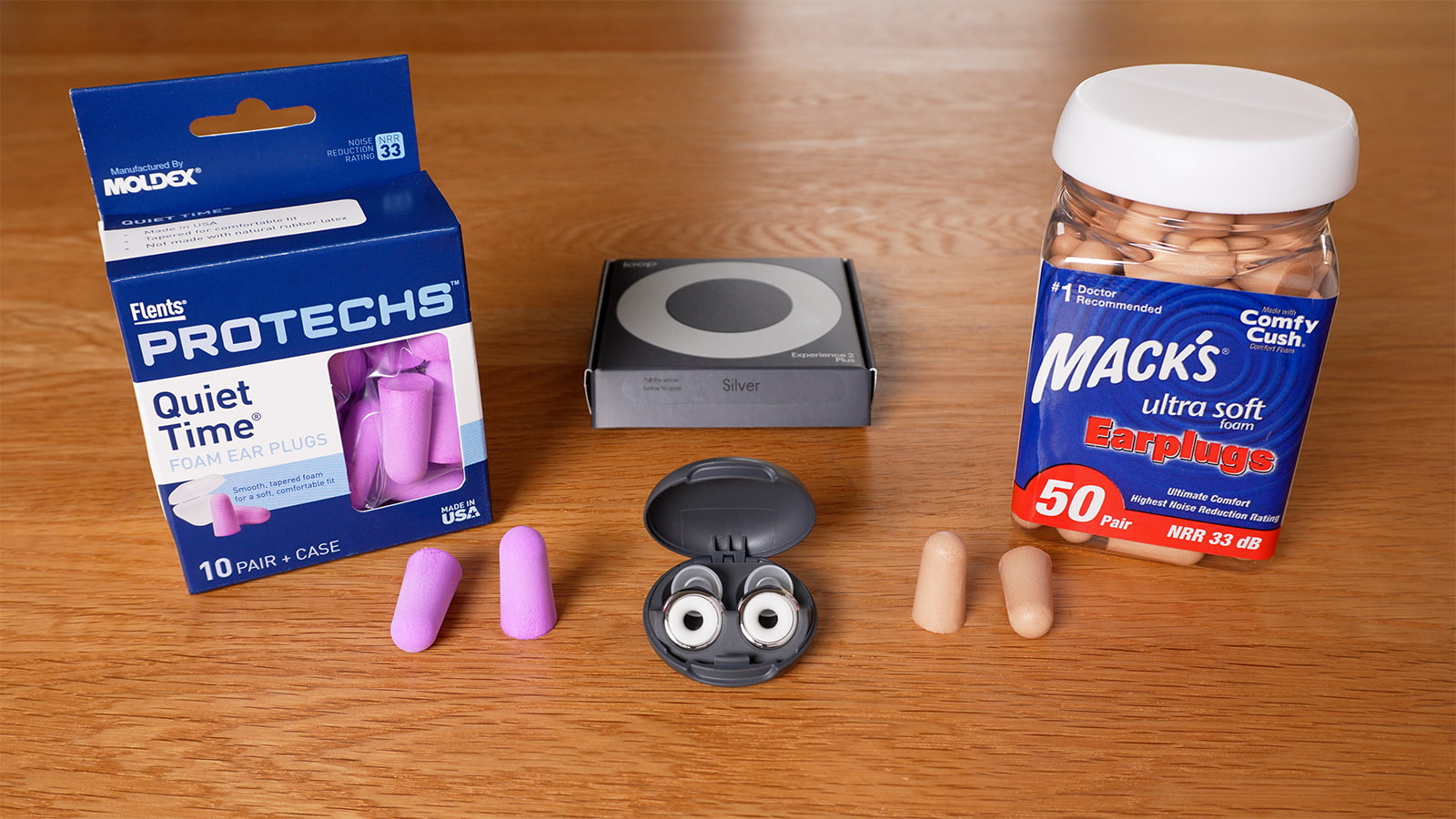
I’ve used earplugs for over 20 years, and I regularly test and review new ones. But people often ask me which ones I actually use myself. They rarely ask me which are the fanciest or latest ones; they just want to know which ones I feel work best.
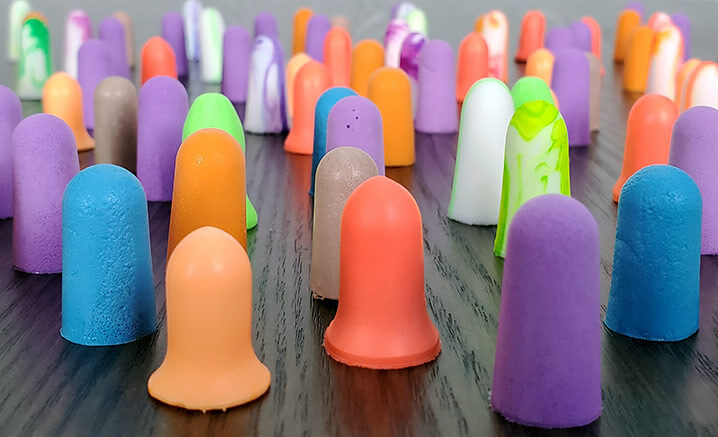
Right now, there are three earplugs I use in different situations: one for sleep, one for maximum noise blocking, and one for live music events. And surprisingly, two of them are just basic, fairly boring-looking pieces of foam.
In this video/article, I’ll explain when and why I use each of those three earplugs. At the end, I’ll run through some alternatives quickly because they’re not going to be right for everybody.
Just so you know, this video and article aren’t sponsored, I bought all the earplugs myself, the companies involved don’t know I’m covering them, and there are no paid affiliate links. My goal is simply to share my experience and help you find earplugs that work well for you too.
So with that said, let’s take a look at my regular sleep earplugs.
Mack’s Ultra Soft: my regular sleep earplugs
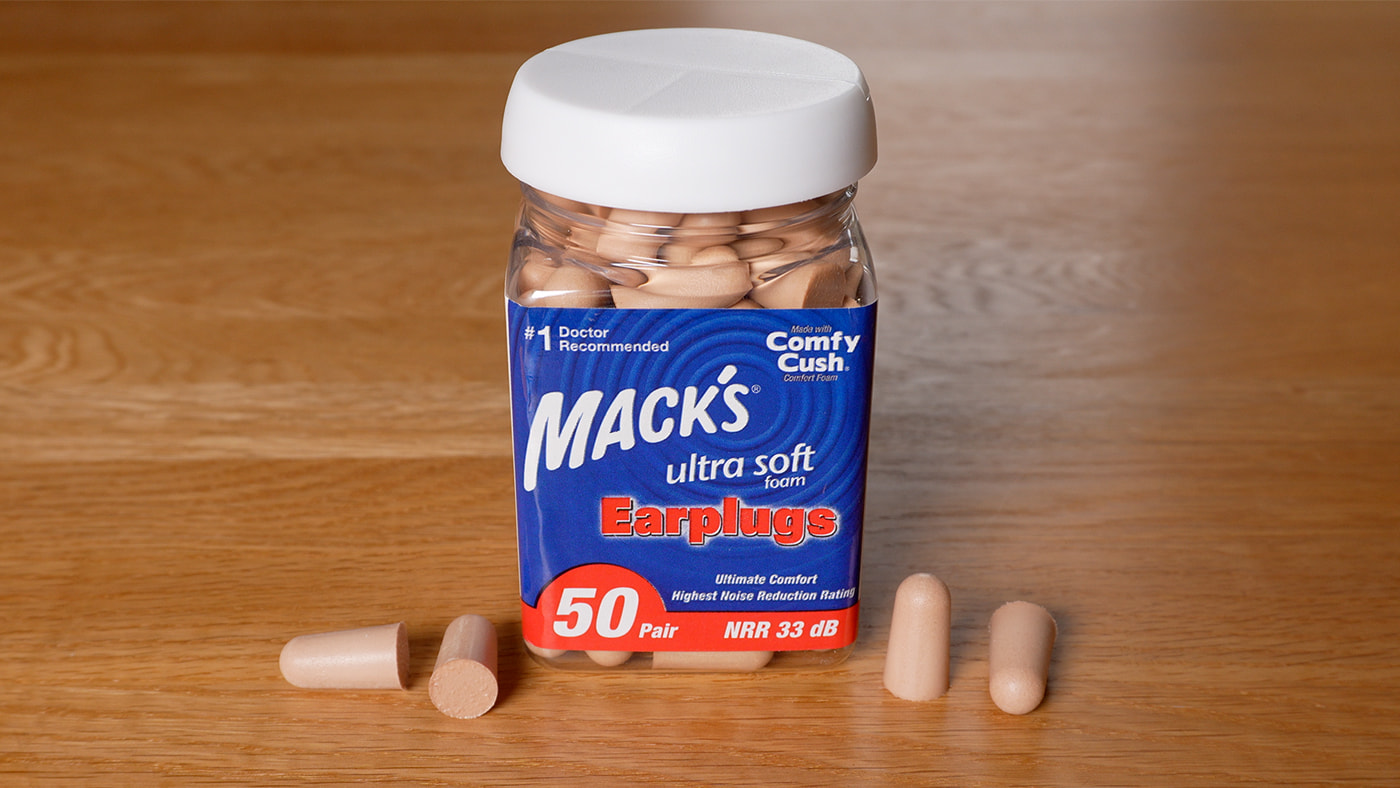
My favorite earplugs overall are the Mack’s Ultra Soft. These were actually my top pick in a comparison of sleep earplugs I did a few years ago.
After all this time, they’re still the ones I most often use for sleep for one simple reason: they’re made from low-pressure foam, which makes them very comfortable for sleep, but they also block out a lot of noise.
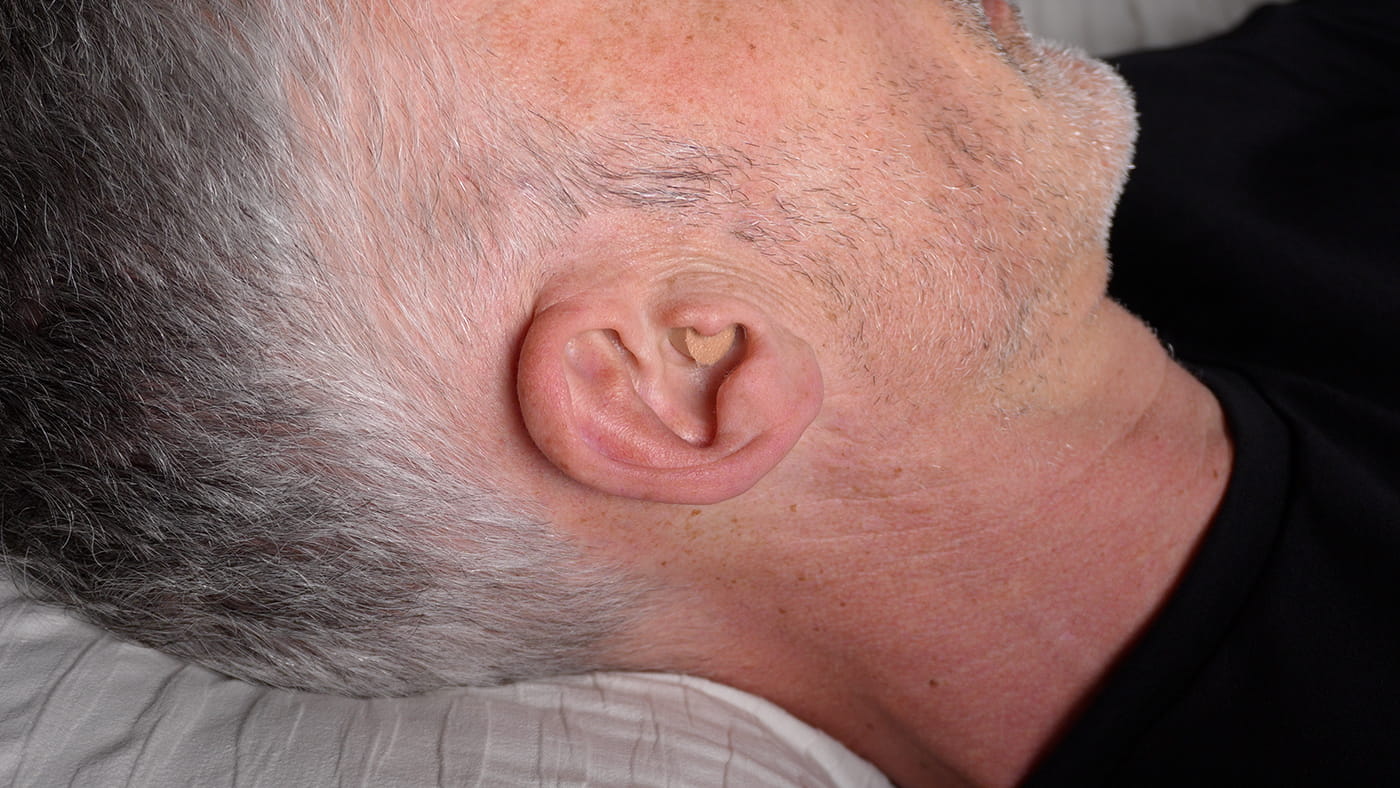
In the photo above, you can see that the little beige Mack’s Ultra Soft are very unobtrusive in my ear. I’m so used to them that I never think about them once they are in. But I know some people take a while to get used to the feeling of foam earplugs, while others just don’t like them at all.
They have a noise reduction rating of 33 decibels in the American system, which is the highest I ever see with foam earplugs. But that doesn’t mean every sound reaching your ears will simply be reduced by 33 decibels. In reality, it depends on factors like the shape and size of your ears and ear canals, how well you fit them, and the frequency of the noise.
As for the size, I’d describe them as medium. You can see how they compare to some others in the photo below. They are quite short though, so if you have very wide or deep ear canals, you might find them a bit too small.
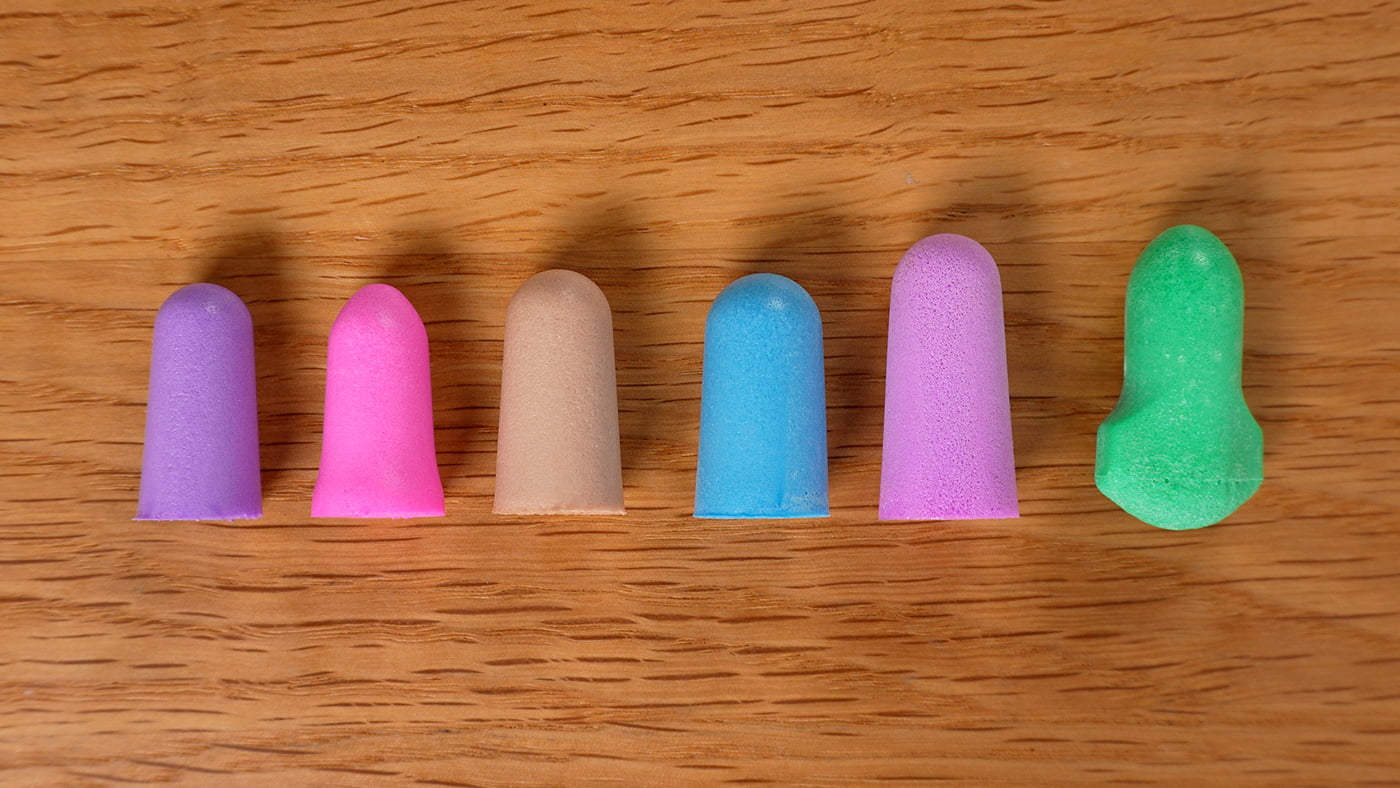
Earplugs in the photo above, from left to right: Mack’s Slim Fit, Mack’s Dream Girl, Mack’s Ultra Soft, Hearos Xtreme Protection, Flents Quiet Time, Howard Leight Max Lite.
The price is pretty good if you get 50 pairs like I did. I paid £17.95 in the UK, which works out at 36 pence per pair. If you’re in the US, where Mack’s is from, you can get them for around 20 cents per pair.
Overall, the Mack’s Ultra Soft are my go-to earplugs if I want to sleep in silence. There’s absolutely nothing fancy about them. They are probably the most uninspiring sleep product I could possibly imagine! But they get the job done, and comfortably.
However, if it’s a really noisy night, I sometimes reach for the Flents, which are coming up next, because they block out even more.
Flents Quiet Time: for maximum noise reduction
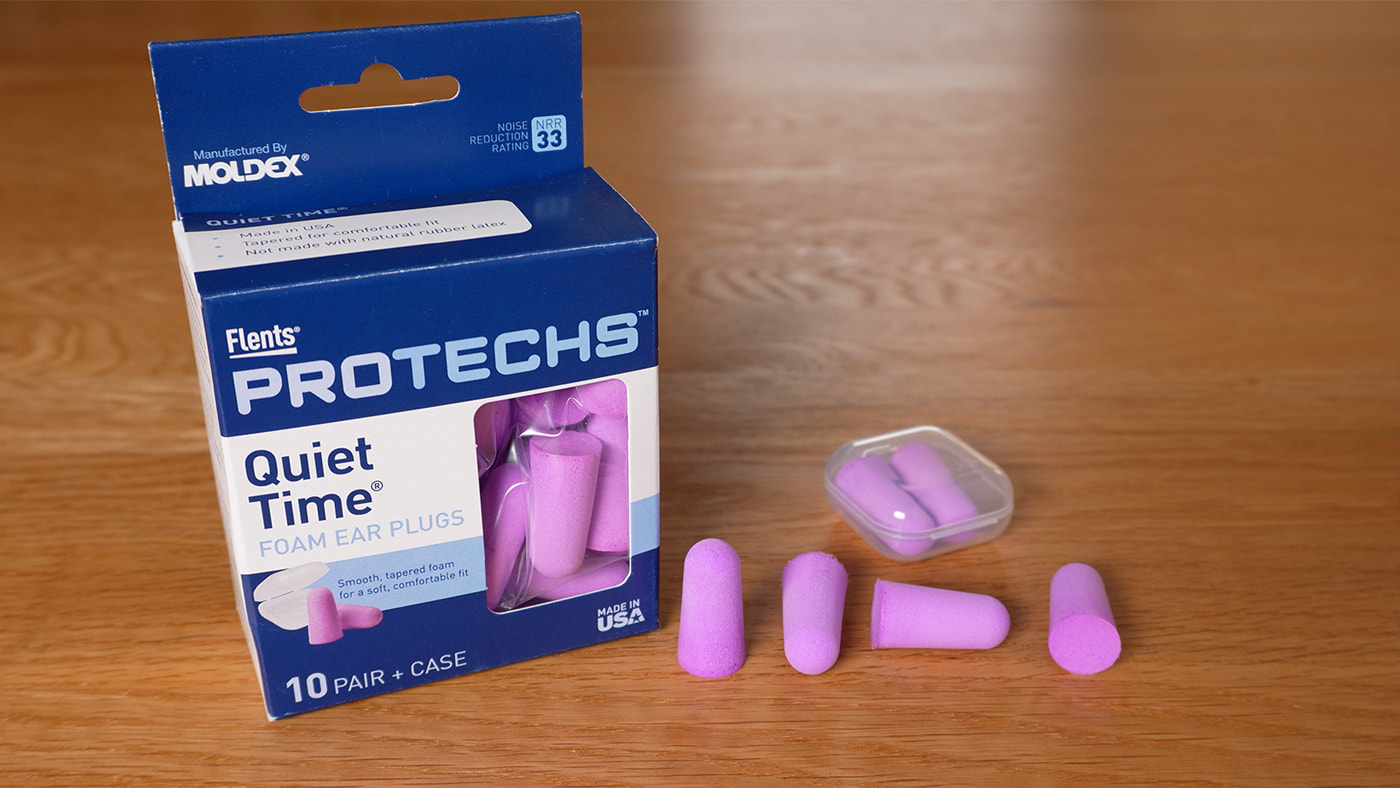
In my last article, I tested 31 earplugs, headphones, and white noise machines to see which can block out loud music best. And the Flents Protechs Quiet Time were the most effective earplugs in that test.
Note: the branding of these earplugs is a bit confusing. My packaging states Moldex as the manufacturer, but they’re sold under the Flents brand as Protechs Quiet Time. I refer to them as Flents Quiet Time for simplicity.
They also have a lab-tested noise reduction rating of 33 decibels, but they’re larger than the Mack’s Ultra Soft and the foam feels denser. They’re just a bit too big for my ears, which means I wouldn’t want to wear them night after night.
So really, I see them as my first backup plan on noisy nights. And actually, if it’s extremely noisy, I sometimes use headphones instead because that’s even more effective. But since my last video, I’ve used the Flents Quiet Time maybe once every two or three weeks, such as when my neighbors are having a party.
If you do have wider ear canals, they might suit you better than the Mack’s Ultra Soft. They’re quite long as well, so they’re less likely to get stuck.
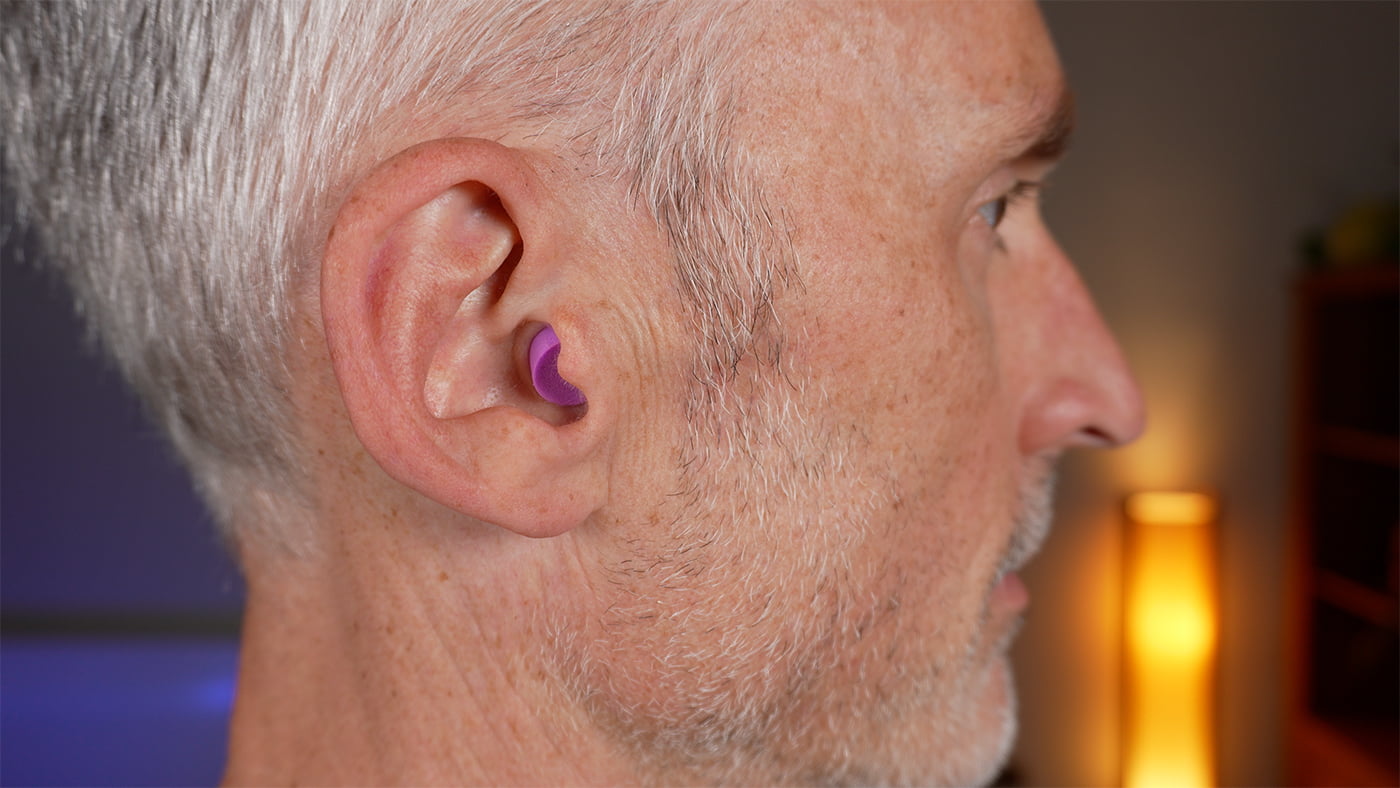
In the photo above, you can see that the Flents Quiet Time are quite large in my ear. When I need to remove them, they are easier to pinch between my fingers than the Mack’s Ultra Soft because they protrude more.
Annoyingly, they’re not so cheap in the UK. I paid £8.34 for 10 pairs, which works out at 83p per pair, which is quite a lot. In the US, I’ve recently seen big packs of 70 pairs for $17.99, which works out at 26 cents per pair.
If you’re not in the US – you’re in the UK, for example – and you only use each pair for one night rather than trying to squeeze a few nights out of them like I do, then that would be a lot of money spent on foam earplugs over the course of a year.
On balance, I really like how good the noise reduction is. And if they were a little bit smaller, I’d probably use them a bit more often. Even though they’re not as comfortable as the Mack’s Ultra Soft, for occasional noisy nights or even daytime use, their noise reduction is fantastic.
Loop Experience 2 Plus: for live music and events
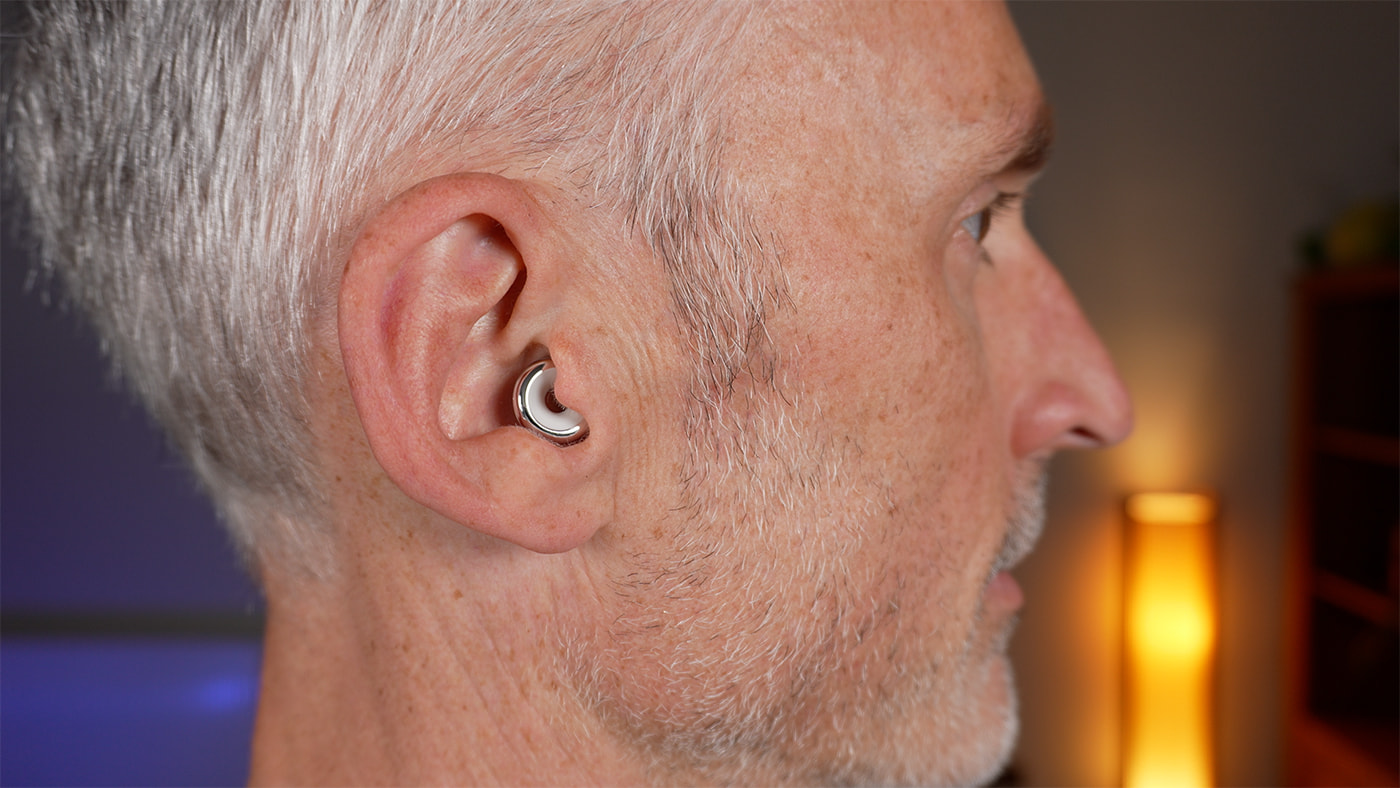
In the photo above, you can see how the circular loop piece sits inside my ear and looks more stylish than basic foam. I keep thinking I should get a different colour as these are a bit shiny for my liking, but I also think it’s a waste of money as I already own a set!
The third pair of earplugs I use is the Loop Experience 2 Plus. I don’t use these very often, but I’m definitely grateful to have them when I do.
If you don’t know Loop, it’s a Belgian company that seems to me to have been on a mission to make earplugs more acceptable, more practical to use at live music events and during the daytime, and also just a bit more stylish than stuffing foam, wax, or silicone in your ears.
They actually have a wide range for different situations, and I reviewed three Loop earplugs a couple of years ago. But since then, the Experience 2 Plus are the ones I’ve used most because they’re great for music events.
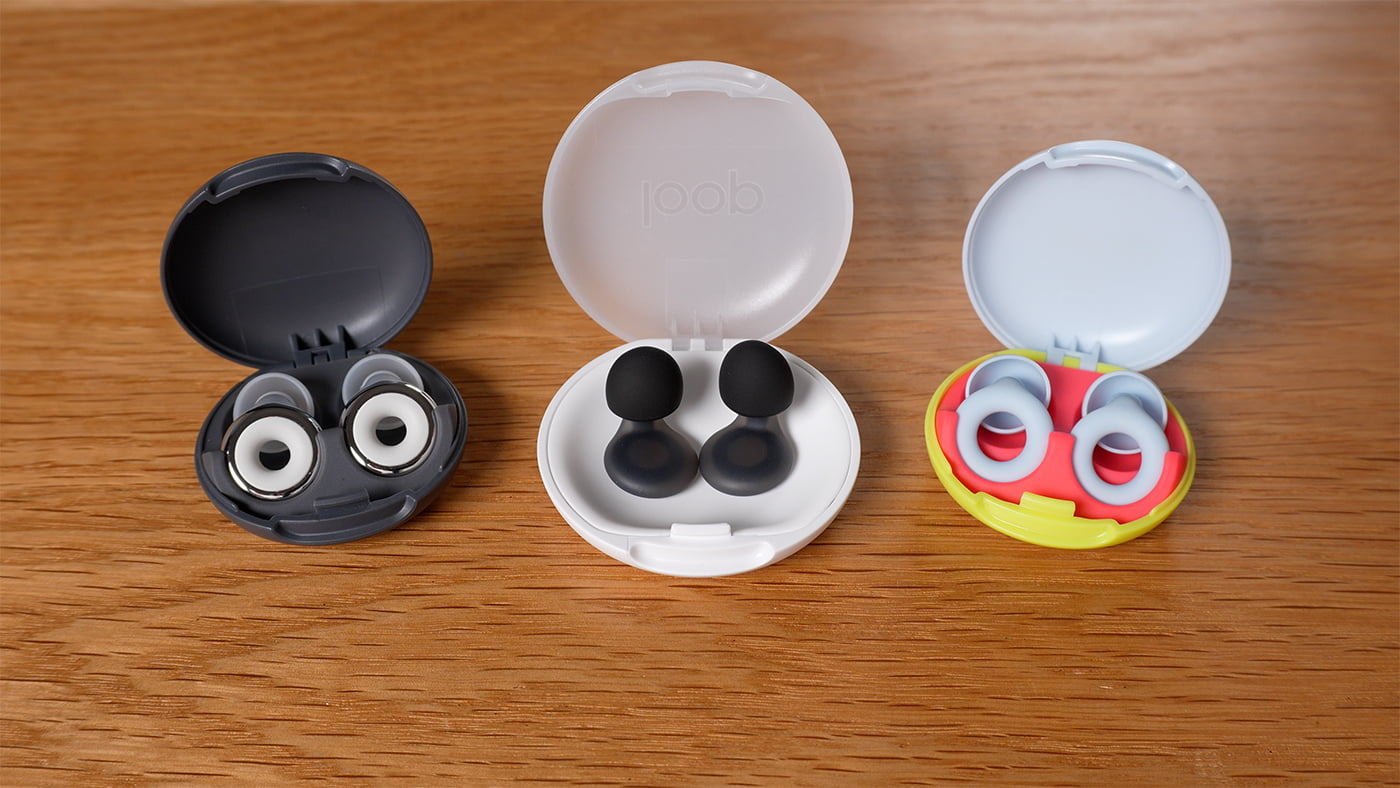
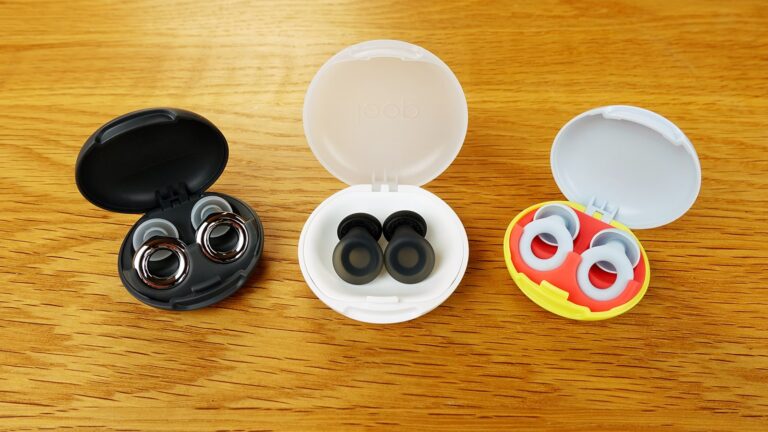
Left to right in the photo above: Loop Experience 2 Plus, Loop Dream, Loop Quiet 2. When I reviewed them a couple of years ago, I liked all three for different reasons. But the Experience 2 Plus are the only ones I still use to this day.
What I like about them is that they were designed with an acoustic filter, so they reduce the overall volume around you, but they don’t simply muffle music in the same way foam earplugs do.
They come with different silicone or foam tip sizes, so you can get just the right fit, much like headphones. And there’s a ‘mute’ piece you can add to the Loop to reduce the noise further.
Confusingly, the packaging lists both the European and American noise reduction ratings. The European single number rating is 17 decibels without the mute and 20 with it. And the American noise reduction rating is 12 decibels without the mute and 15 with it.
They don’t reduce as much noise as foam earplugs, but that’s because they’re designed to lower the volume while keeping music sounding relatively natural.
A practical point I really like about the Loop is that you can easily insert and remove them by holding the exterior circular loop section. I feel that’s more practical, and more hygienic, than having to repeatedly roll foam earplugs between your fingers. It’s especially useful at a gig, nightclub, or festival when you might have dirtier hands than usual.
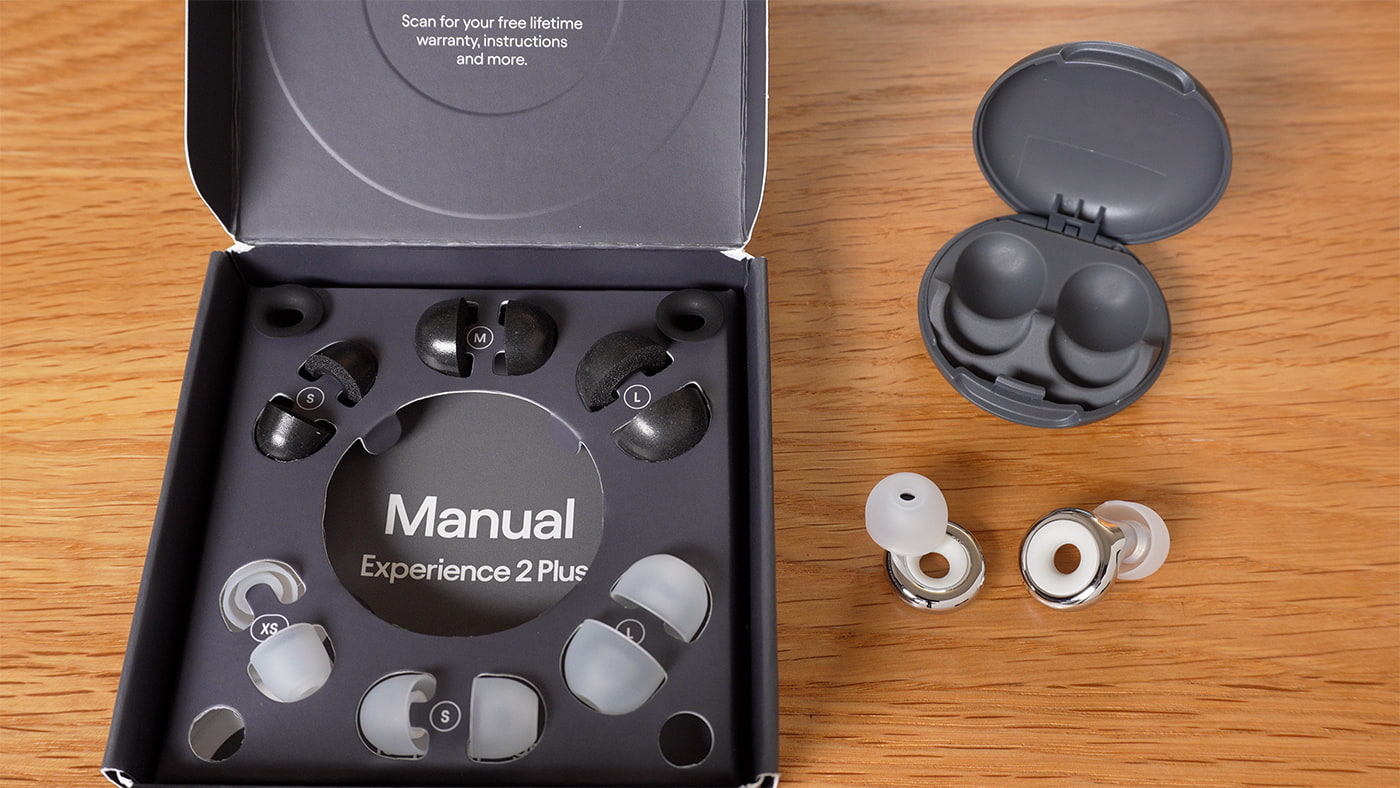
Above, you can see the spare tips that come with the Experience 2 Plus. I like how 4 tip sizes are available in silicone and 3 in memory foam, but I’m not sure why there are only 3 in foam. I usually opt for the silicone when I go to music gigs as they are a bit easier to insert.
I also like how the earplugs sit snugly in the carry case, so they’re less likely to fall into a dark puddle at a muddy festival. You can turn the case upside down and they stay in, unlike some of the budget ones coming up later that just fall straight out of the case.
A common criticism I hear is that Loop earplugs feel quite expensive. These ones currently cost £39.95 in the UK or $44.95 in the US.
I know that sounds like quite a lot for earplugs. The good thing, however, is that you can get a lot more uses out of them than foam, silicone, or wax earplugs. Loop says you should replace the tips every 3 to 6 months. And since the tips cost less than the original pack, the long-term cost isn’t actually so bad. It’s currently £14.95 in the UK or $14.95 in the US for a pack containing a pair of each tip size.
Despite the initial higher price and fancy branding, personally, I’m a big fan of what Loop have done. If more people are happy to protect their hearing at live music events, or find earplugs more acceptable to wear during the daytime if they find the noise of the world overwhelming, then that can only be a good thing.
Even though I tried some for sleep and daytime use, I ended up sticking with my foam earplugs for sleep. But for gigs in noisy venues or festivals, the Experience 2 Plus are fantastic.
Alternatives to the foam earplugs
Those are the three earplugs I use myself when I’m not actively testing new ones. But since everyone’s ear canals are unique, let’s take a look at a few alternatives.
For smaller ear canals
If you need smaller foam earplugs, you could try the Mack’s Slim Fit or Mack’s Dream Girl. You can see in the photo below that they’re both considerably smaller than the more industrial earplugs.
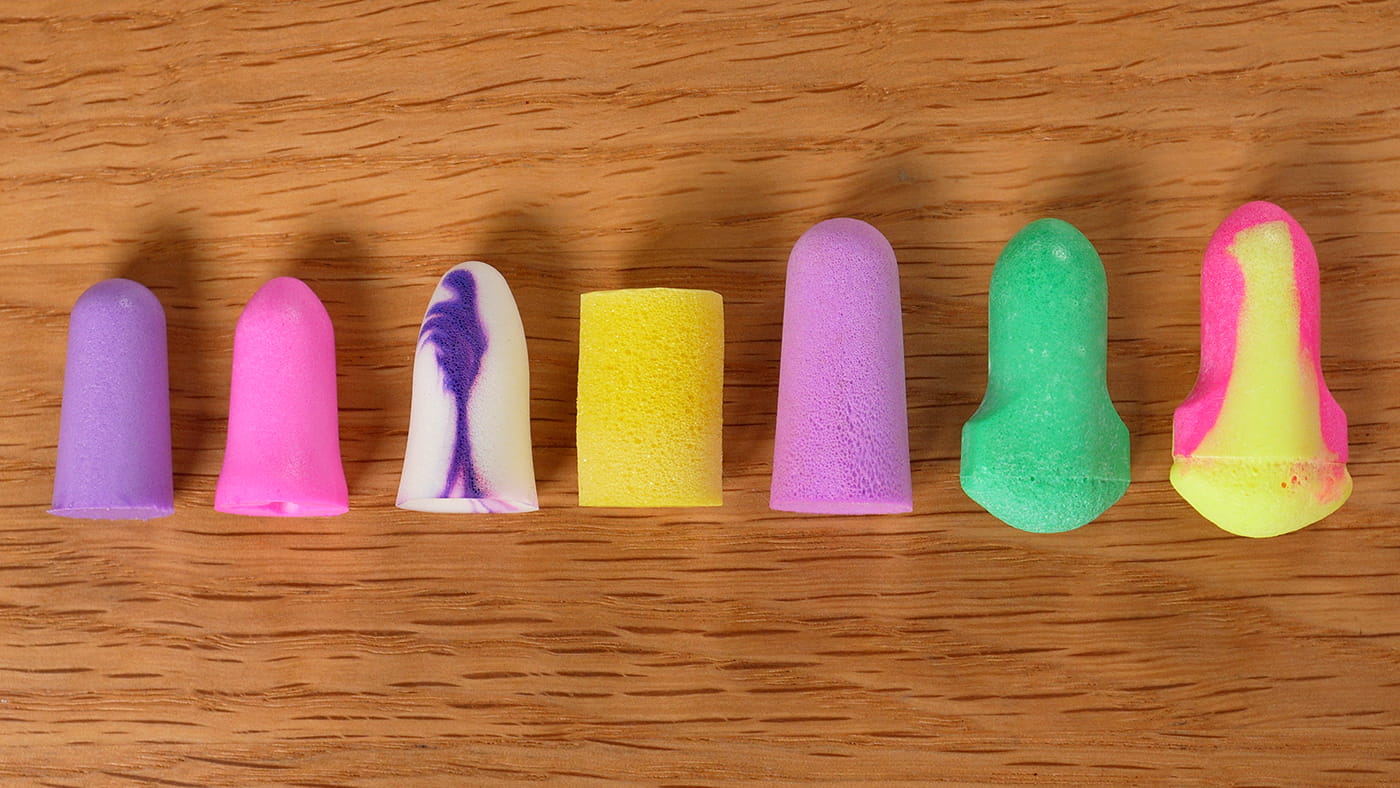
Earplugs in the photo above, from left to right: Mack’s Slim Fit, Mack’s Dream Girl, Moldex Spark Plugs, 3M Comfort, Flents Quiet Time, Howard Leight Max Lite, Howard Leight Laser Lite.
For larger ear canals
For larger ears, the Flents Quiet Time, the Howard Leight Laser Lite, Howard Leight Max Lite, or the Hearos Xtreme Protection are all good options. You can see how they compare in the photo below. The ones with winged ends are particularly good if you struggle to grip earplugs between your fingers when you need to remove them.
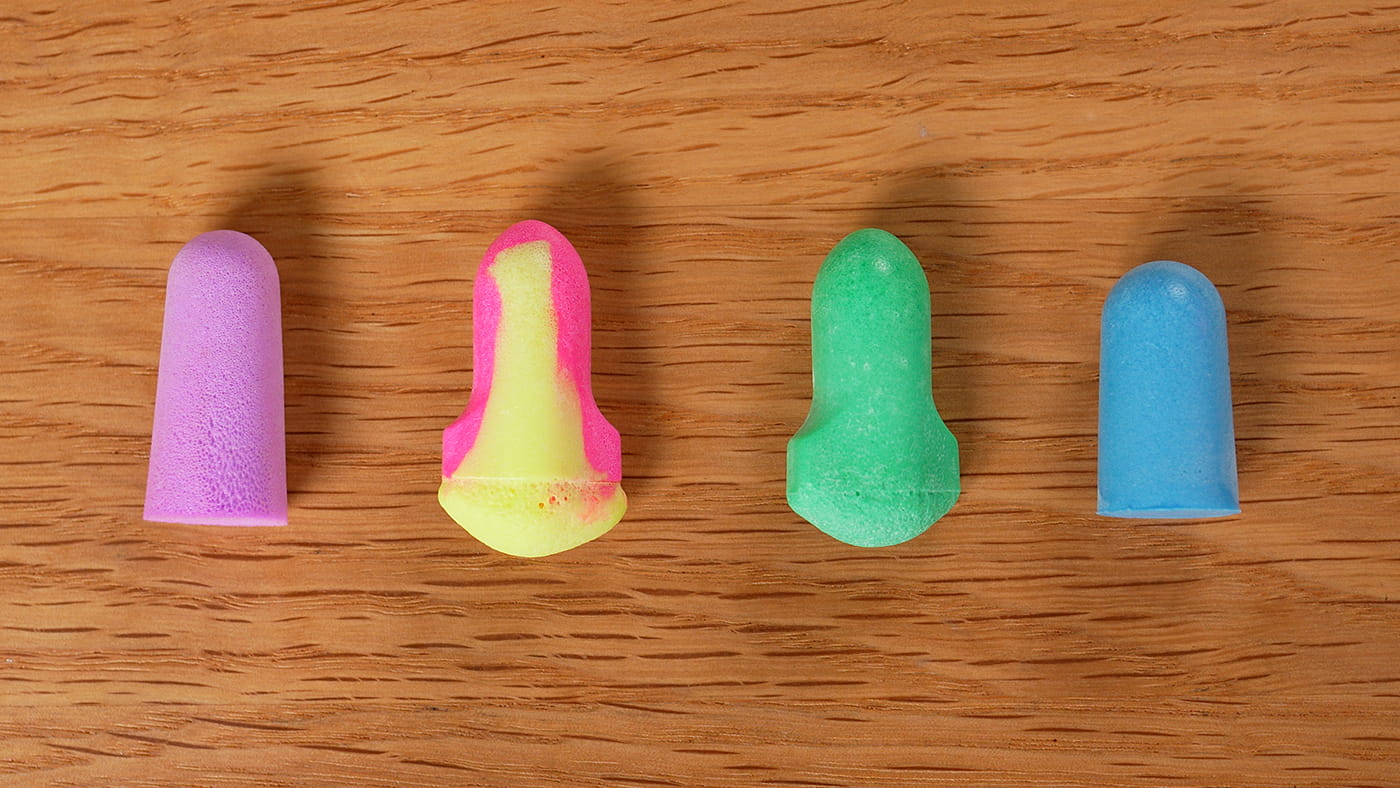
Earplugs in the photo above, from left to right: Flents Quiet Time, Howard Leight Laser Lite, Howard Leight Max Lite, Hearos Xtreme Protection.
If you don’t like foam earplugs
If foam just won’t stay in or feels uncomfortable, moldable silicone like the BioEars form a seal over the ear canal instead of going inside. They block less noise and cost more per pair, but they’re a good alternative if foam just isn’t for you.
You can also get wax instead of silicone, but I personally find it harder to fit. I’ve tried many different brands, and always find I have to spend longer warming up the wax so I can shape it over my ear canal, and often have to press harder than I do with silicone, which can be uncomfortable. Having said that, I know some people prefer wax to silicone, so it’s a case of finding what works best for you.
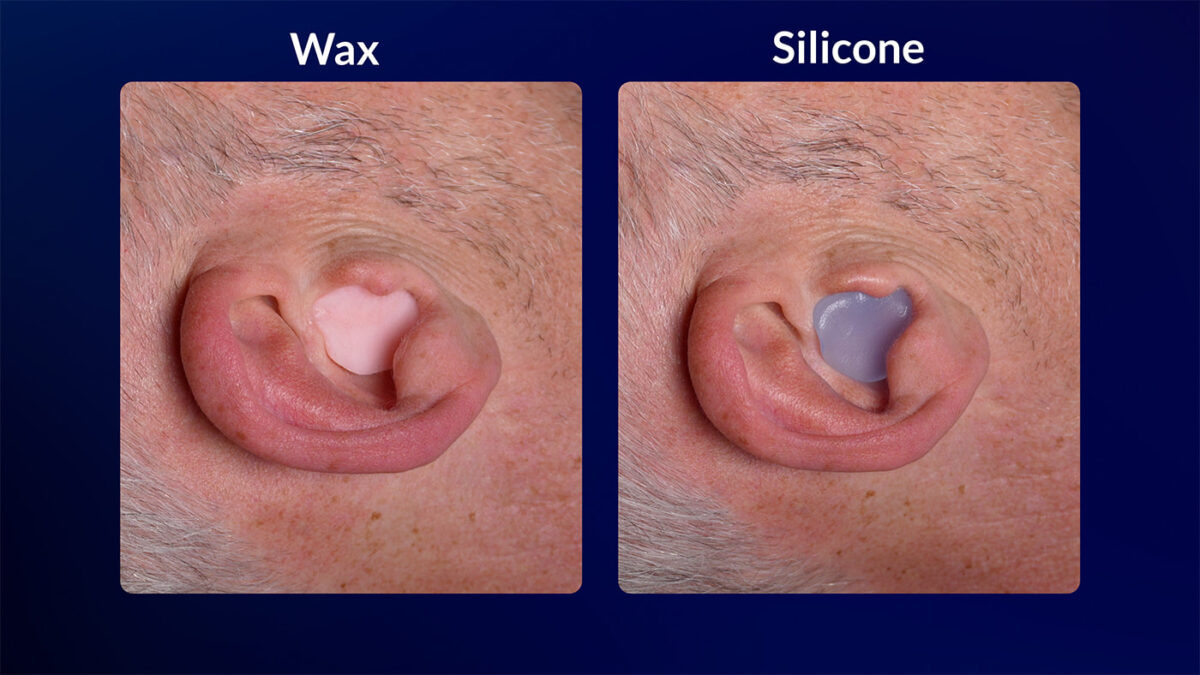
In the photo above, you can see how some wax and silicone earplugs look in my ear. They both cover the ear canal rather than going deeply inside like foam. The trick is to make sure you get a good seal, which takes both practice and patience!
Lower-cost Loop alternatives
If you look online on sites like Amazon, you’ll find quite a lot of earplugs that look like they were either inspired by Loop or are just more blatant knockoffs.
I recently bought four different ones to find out how good they are. See if you can work out which of the seven in the photo below are the original Loop.
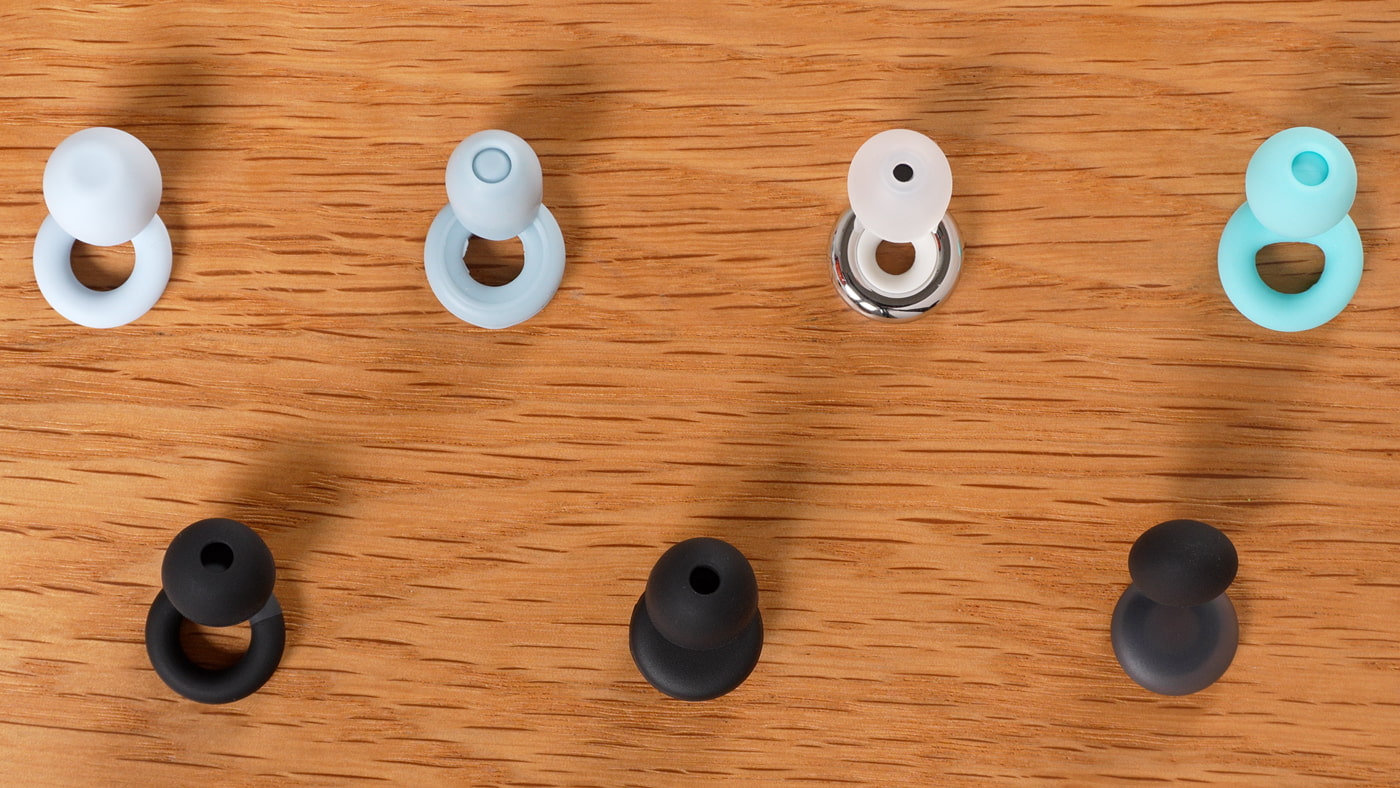
Earplugs in the photo above from left to right, top to bottom: Loop Quiet 2, Mazo Moon, Loop Experience 2 Plus, Hoyio, Justrvn, Boots Wellthy Party Earplugs, Loop Dream.
At first glance, a couple of them look quite similar. But I can tell you that when you look more closely, the original Loop definitely seem better made to me. For example, they tend to have a smoother finish than the others.
And to be honest, the three I bought on Amazon were a complete waste of money.
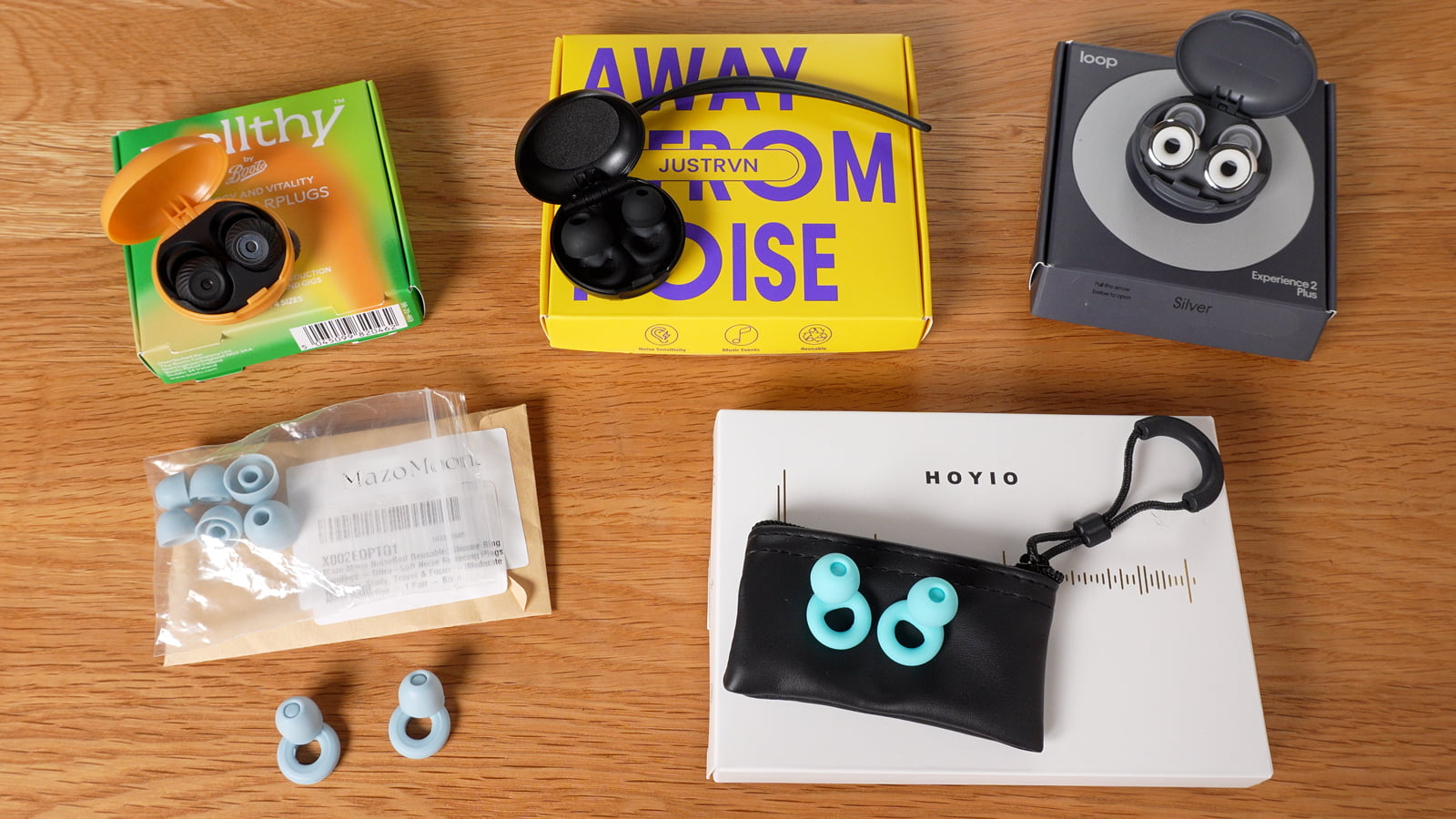
The Hoyio didn’t block out much noise and had a disgusting chemical smell. The somewhat unpronounceable Justrvn didn’t block out much noise and were quite uncomfortable to wear.
And the Mazo Moon felt cheaply made, didn’t block out much noise, didn’t come with a carry case, and looked more like something I’d get in a Christmas cracker!
The only decent budget alternative I found was the own-brand ‘Wellthy Party Earplugs’ from Boots in the UK.
I found the acoustic filters worked well with live music, and they cost quite a lot less. But it did make me laugh to see them right next to Loop earplugs on the shelf, with very similar packaging, a similar case, and a similar acoustic concept.
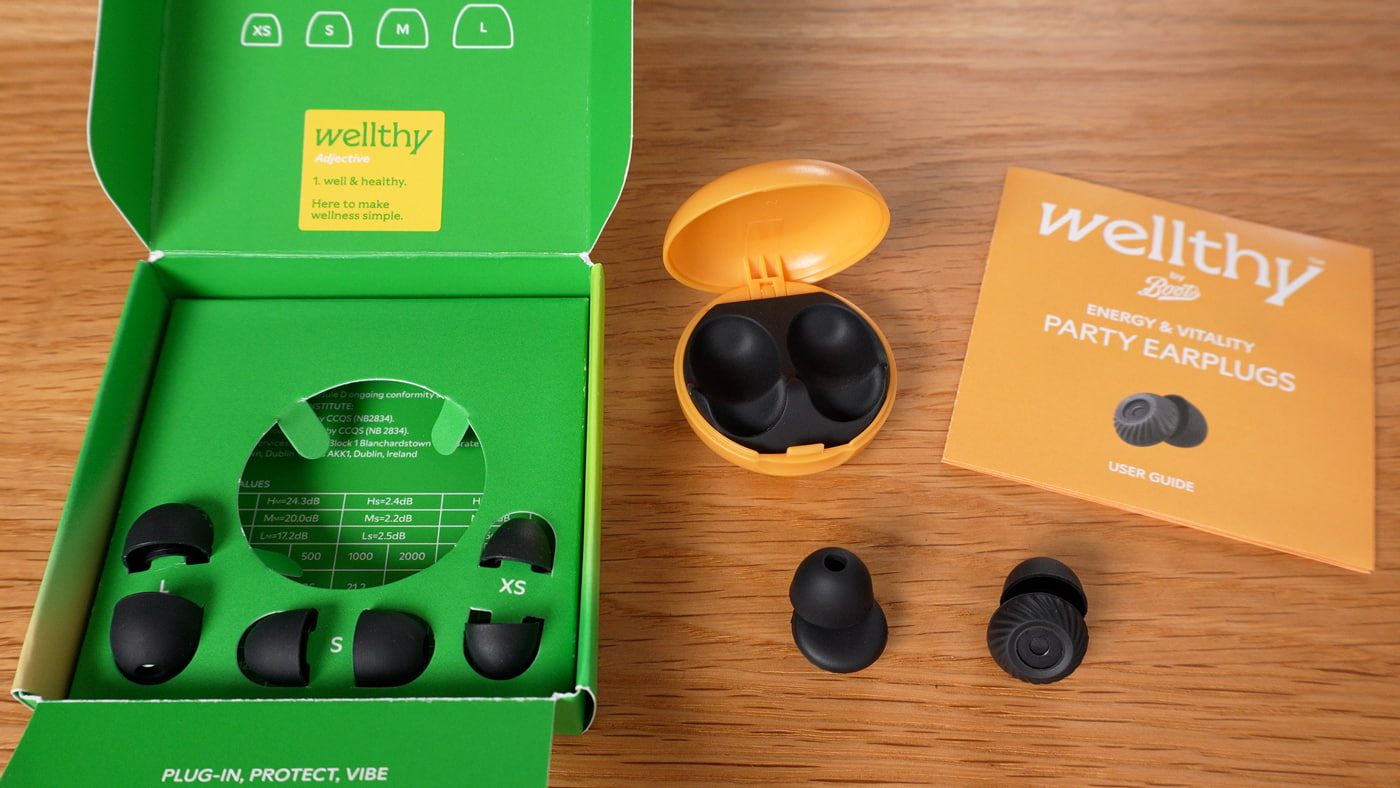
In the photo above, you can see the best low-cost Loop alternative I’ve found so far – the Boots Wellthy Party Earplugs. They had two other styles in the shop I visited as well. One important difference is that they are looser in the case than the Loop Experience 2 Plus, and will fall out if you hold it upside down. Otherwise, I thought they were pretty good.
If you are in the UK, I think the Boots version is a reasonable budget option. But the cheap ones I bought on Amazon definitely weren’t worth it, and I personally wouldn’t trust those to protect my hearing.
You probably don’t need three different earplugs
One important final point to make is that I don’t think it’s necessary for everybody to have three different kinds of earplugs. I guess I’m in a unique position because I regularly test and review sleep products, so it’s normal for me to have different options. My cupboards and storage spaces are full of sleep products!
However, if you do have problems sleeping because of noise, or you work with noise during the daytime, and you sometimes go to live music events and you want to protect your hearing or you find it overwhelming, then perhaps having two different kinds of earplugs is a good option.
Now, I’d love to know which earplugs you use and which material you find the most comfortable and effective as well. And if you have any questions about these or any other earplugs, let me know in the comments below. It’s always good to hear from you.
Thanks for watching my video and/or reading this article.
Sleep well!
Where you can find the earplugs
All the earplugs I cover in this article can be found on Amazon, with the exception of the Boots Wellthy Party Earplugs. You can get those on the Boots website or in stores in the UK. You can also find the Loop earplugs if you look up their website Loop.com. There may be other online stores selling the earplugs, but I usually get mine on Amazon.