

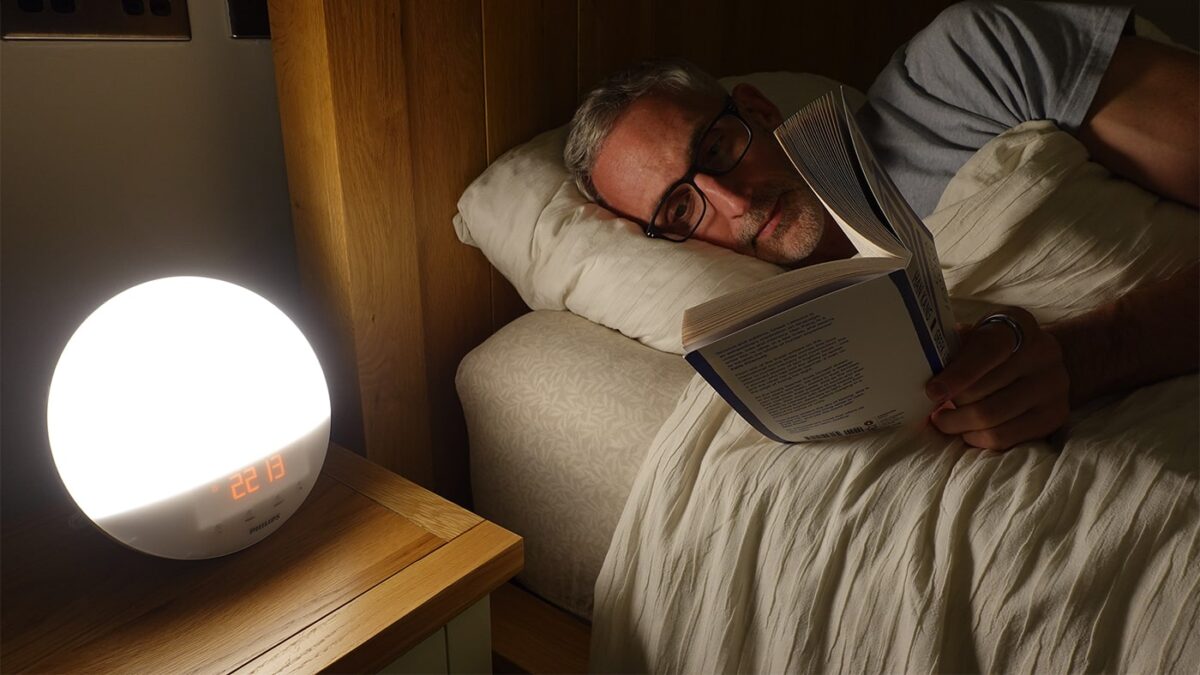
That’s me in the photo above, reading my book until I feel like I’ll probably fall asleep soon after turning the light off.
I have a high-quality mattress, comfortable bedding, an advanced bed cooling and heating system, and a wide range of other sleep tech devices that I can use if I want to.
But I still sometimes have a bad night’s sleep. Why is that?
While all of those items help in their own way, I still believe I have to take responsibility for my sleep. That means doing more of the things that I know help me sleep better, and less of the things that I know disrupt my sleep.
Solutions and habits
Even the best bed in the world won’t magically make me fall asleep if I’m wide awake. And as much as I love breathing exercises, if I’m wired from guzzling down too much strong coffee in the afternoon, there’s going to be a LOT of deep breathing before I fall asleep.
Don’t get me wrong – I think it’s good to have effective solutions to specific problems: earplugs for noise; a big bed for couples; the right style of mattress for you personally; appropriate bedding for hot or cold weather, etc.
But it’s only half of the picture – for me at least. I still need to be mindful of what I do during the day, and the night, if I want to get a good night’s sleep.
In this article, I’m going to share 10 sleep tips – some of the key actions that work well for my sleep. They might not all be right for you, but I wanted to share them in case there’s something you haven’t considered before.
Keep in mind that I try to do all of these techniques as often as is reasonable. And that’s the secret for me: I try to create positive habits rather than doing them sporadically. It’s a case of working out which methods work well, and then trying to stick to them as often as possible.
The short version
- Keep the bedroom at a comfortable temperature. Temperature is personal, but for me it means not letting it get too hot, too cold, or too humid.
- Tire out both my body and mind during the day.
- Spend time in daylight, ideally earlier in the day.
- Stick to a regular sleep schedule.
- Read or listen to a book until I feel sleepy.
- Try not to get stressed if you can’t sleep, or wake up in the night. Don’t focus on not sleeping, but think about how comfortable the bed is and let your mind wander to something pleasant.
- Be mindful of what, and when, I eat and drink.
- Don’t take stress to bed. Make a to-do list, and avoid difficult conversations late at night.
- Allow enough time for sleep, rather than jumping into bed with the exact amount of sleep you need before the alarm goes off.
- Make sure the bed is big enough, and consider a backup bed if you or a partner are disturbing each other’s sleep.
1. My bedroom cave: cool, dark and quiet
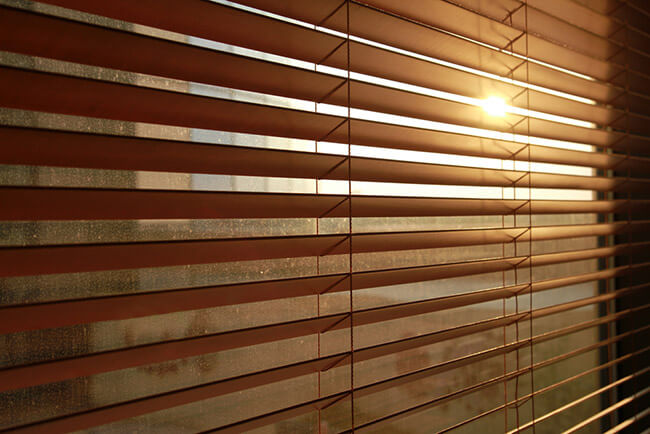
I sleep best when my bedroom turns into a cave when I turn the lights off. Not a ‘man cave’ with an Xbox. Just a cool, dark and quiet cave.
Temperature
When I was doing my own reading around the recommended bedroom temperature, I discovered there was conflicting research evidence as to what it may be. It’s complicated by the fact that different groups of people seem to prefer different ambient room temperatures.
For me, setting the bedroom thermostat to 19°C or less feels most comfortable, especially when I share the bed. You might prefer it a bit warmer or cooler than that – it’s something to work out for yourself. Just keep in mind the general rule of thumb that too hot, too cold, or too humid may not be ideal for sleep.
I pay particular attention to how the bedroom and bedding are set up as the seasons change. Importantly, if I feel too hot or too cold when I get into bed, I do something about it rather than accepting it and just trying to fall asleep anyway.
I turn the heating off in the bedroom long before going to bed, and never use warm bedding in the summer (I’m mindful not to be too cold in the winter though).
I always have a quick shower before going to bed, even if I had one in the morning. It feels good to freshen up, and it also feels cooler when you get out of the shower and go to bed.
I’m also lucky enough to have a bed cooling device. But even with that, I make sure the ambient room temperature and bedding are appropriate for the current weather.
Noise
I turn off any devices that make noise unless they are essential. For all other noise, I tend to use well-fitting earplugs with a high noise reduction rating of 33 decibels, or sleep headphones.
Light
I always make sure the sunlight is blocked out, especially in the summer when it rises early. I have a sleep mask to hand if the light finds its way in, and always take one with me when I’m staying away from home.
Cool. Quiet. Dark. Three important words for me when it comes to bedtime.
2. Tired body + tired mind = better sleep (usually)

My insomnia was at its worst in my early
In my later 20s, I started a much more mentally challenging job and got into weight training and swimming. I soon found that I would sleep better on the days when both my brain and body were tired.
So, I try to tire out my brain and body every day. Even if I’m having a rest day following more strenuous exercise, I’ll at least go for a long walk and spend plenty of time outside.
If you’re not currently in work, or don’t have a job that’s mentally taxing for you personally, then there are other ways to challenge your brain. Reading a book, doing puzzles, upgrading your skills, learning a language, working out how to fix or improve something, job hunting, finding a business opportunity – the possibilities are endless.
However, I also think it’s okay if you just can’t find the energy or motivation to exercise some days. But I try to keep in mind a simple concept that’s deceptively easy to forget: If I’m not physically and mentally tired, I can’t expect easy sleep for free. And this is something I can control.
3. Spend time in daylight

In the photo above, I’m walking in one of my favourite woods. My daily morning walk in our local park isn’t quite as stunning, so I try to get out into the woods most weekends. It’s my happy place!
Back in 2023, I had an ongoing issue with back pain. Both the physiotherapist and chiropractor I saw, as well as numerous podcasts, videos, and articles, suggested going for a walk first thing in the morning rather than doing my usual yoga routine.
Over time, my back pain got better, but I also noticed that I started falling asleep quicker too.
I’ve always spent time outdoors when possible, but this was the first time in my adult life when I developed the habit of going for a 30 minute walk every single morning. And I still do it to this day.
The effect of daylight isn’t unique to me. Exposure to daylight is one of the key factors that influence the human circadian rhythm. And research studies, such as those in 2019 and in 2022, have found that people who spend adequate time in daylight have improved sleep.
One of my favourite podcasts is ‘Feel Better, Live More with Dr Rangan Chatterjee’. Three episodes I listened to in which he asked sleep experts, such as Dr. Matthew Walker and Dr. Satchin Panda, for some actionable tips all had spending time in daylight in their top tips.
4. Less lazy Sundays
The sleep habit I probably hear or read about most often is to stick to a regular sleep pattern. For many years, I used to get up at a regular time during the week to go to work. However, I had no set bedtime – it could be anything between 10 p.m. and 2 a.m.
At the weekend, like many young people, I’d often stay out late on Friday, Saturday, or both. Naturally, a late night out was usually followed by a lie-in on Saturday, Sunday, or both.
It wasn’t unusual for me to wake up on a Sunday with a hangover, watch movies and eat pizza. However, I wouldn’t be tired enough to sleep well on Sunday night, which in turn would knock my whole week out of sync.
The answer?
For one thing, I gave up alcohol nearly five years ago, so my sleep isn’t affected by parties or hangovers. And unless I’m feeling particularly sleep deprived and need to recharge my batteries, I go to bed and get up at more or less the same time every day of the week.
If I do stay up later at the weekend one night, I still set my alarm for a reasonable time the next day, making do with a bit less sleep but keeping my schedule on track.
“Boooooring!”, I hear you say.
And I get it. If your social life is more important than your sleep right now, that’s obviously your choice. But if you’ve just slipped into the habit of staying up late for no particular reason and then sleeping in late too, this might be an adjustment that reaps rewards.
5. Read a book
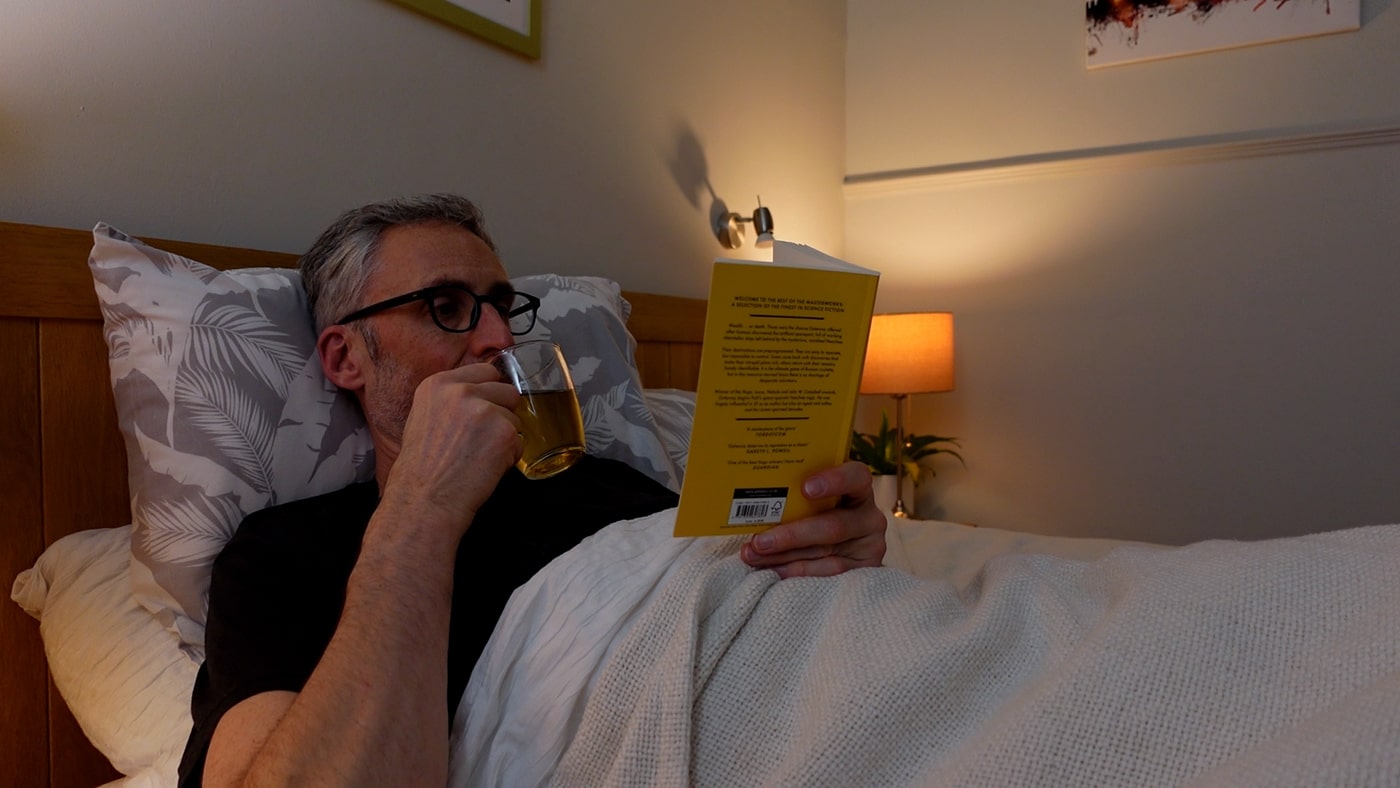
It’s so simple, yet it’s one of my favorite techniques. As often as possible, I read in bed until I can no longer focus on the words, or wake myself up with the book dropping out of my hand.
It’s important to note that while in an ideal world I’d go to bed at the same time every night and fall asleep instantly, it doesn’t usually work that way.
Instead, it may be better to do one of two things:
- Only go to bed when you feel tired.
- Go to bed at a regular time and read until you feel tired enough to sleep.
The first method might work well if you can’t face lying in bed tossing and turning for hours. However, I usually prefer the second method. At least I’m in bed relaxing and giving my body and mind a clear signal that it’s bedtime.
If you’re not a fan of reading books, you could listen to an audio book, podcast, radio, or try doing a relaxation exercise in bed until you feel sleepy.
One caveat: if you often lie awake in bed for ages, it might help to avoid spending too much time ‘hanging out in bed’ awake.
CBT-I (an evidence-based therapy for insomnia) often recommends getting out of bed if you don’t fall asleep after about 15–20 minutes. You would then do something quiet in low light, and only go back to bed when you feel sleepy. It can also involve temporarily reducing time in bed to rebuild your sleep drive. So if you are the kind of person who spends a lot of time awake in bed before falling asleep, perhaps do some further reading into CBT-I.
6. Keep calm and carry on
For many years, I was my own worst enemy when it came to dealing with insomnia and I didn’t even know it.
I used to think I should be able to fall asleep immediately (20 to 30 minutes is actually quite normal). When sleep didn’t happen within a few minutes, I’d start stressing about being awake.
Even if I did fall asleep, I’d often wake up in the night or long before my alarm was due to go off. This would then trigger anxiety that the next day would be awful because of a lack of sleep.
My self-defeating stress was pointed out to me one night by my partner. She was fed up with being woken by my constant position changing and grumpy huffing and puffing (which was louder than I thought, apparently).
I eventually decided to try what she suggested: just stay calm. By making the decision to change my attitude, I believe there was a positive shift in my mind. After that, I believe I started falling asleep a little quicker, no matter what time of the night it was.
By accepting the fact that sometimes I won’t sleep right through the night, and by understanding that the next day won’t be as painful as I feared, it’s much easier to keep the late night anxiety at bay.
So instead of focussing on my sleep, worries, or the next day, I focus on how comfortable the bed is and how nice it feels, try to relax and think about something pleasant.
7. I’m mindful of what I eat and drink

I’m not sure if there is a perfect diet for sleep, despite ongoing research into what does or doesn’t affect our sleep.
Nevertheless, there are a few key factors that seem to help me:
- I gave up caffeine (but have been back on it again recently).
- I gave up alcohol.
- I try to eat a big lunch and a lighter dinner.
- I don’t eat spicy food late at night.
- I keep hydrated and drink plenty of water during the day.
- I eat a healthy diet, with lots of vegetables and fruit, and minimal ultra-processed food.
I’m not saying you should also give up caffeine and alcohol, but if you’ve been thinking about it, you might find those articles above interesting. Otherwise, my advice would be to drink less of it in the evening/night and try not to drink caffeine after lunchtime if possible.
8. Don’t take stress to bed
Stress, anxiety, worry, thinking. Whatever you want to call it, switching your mind off at night isn’t always easy. I think it’s good to find a healthy and positive way to do so though.
For me, it’s really important that I don’t allow my bedtime to be my thinking time, especially during times when I have bigger challenges or problems.
Here are some ways I try to stop the nighttime train of thought from derailing my sleep:
- I try to allow time earlier in the day to sit quietly for a moment and think about important matters. It’s also another really good reason to go for a walk if I have a lot on my mind. That way, I don’t feel like I have to solve all my problems in the dark with my eyes closed.
- If I have lots on my mind, before getting into bed I write a quick list of things I need to do, plan or even think about. Then I can relax knowing that I can pick it all up again in the morning with a fresh outlook.
- When my mind is overactive, I do simple breathing exercises or boring mental word games in bed to distract myself.
- I agree with my partner not to have emotionally charged or difficult conversations at night in bed. They are always best dealt with during the daytime when you’re not tired, and ideally in a good mood.
- I try to talk about my worries during the daytime with someone I can trust, and don’t keep them all to myself.
9. Allow enough time for sleep
Sleep is crucial to our physical and mental well-being, yet we so often sacrifice it for other activities.
I used to push my bedtime right up until the start time of what would be my ideal amount of sleep. So if I felt I needed eight hours to be at my best and had to get up at 8 a.m. for work, I’d go to bed at 12 a.m.
The problem is that this can then trigger that feeling of stress if you get into bed and don’t fall asleep straight away. You’re kind of setting yourself up to fail.
Nowadays, if I want eight hours of sleep, I go to bed at least eight and a half hours before my wake up time. If I’m watching a film, I pause it. If I’ve got work to do, I leave it until the morning.
Don’t allow unnecessary things to erode your precious sleep time. Give yourself a chance to go to bed feeling relaxed about how much time there is before the alarm goes off.
10. Get a big enough bed and backup bedroom
A few years ago, my partner and I experimented with sleeping in different bedrooms.
It made a significant difference to our quality of sleep. We both had loads of space in bed, we didn’t disturb each other when we had a bad night’s sleep, and we could have the room temperature and covers exactly how we wanted.
After a year, we decided that it was a bit sad to sleep apart, so we decided to buy a king-sized bed and squeeze it into the bedroom. It made a massive difference.
More recently, my partner has needed to get up very early from time to time. We often sleep separately the night before so she can go to bed earlier without me disturbing her when I go to bed, and she doesn’t disturb me in the morning either.
So my theory now is that if you have any suspicion that you and your partner are disturbing each other’s sleep, try getting a bigger bed. If that doesn’t work, have a backup spare bed you can slink off to if their snoring or movement is disturbing your sleep.
Failing all that, just have separate beds. You won’t be the only couple saving your sleep that way.
Final word
Please remember that the tips in this article are based on my life only, and may not be right or effective for everyone.
It’s important to get a professional opinion if you have ongoing problems with your sleep. For example, if you snore or have any kind of breathing irregularities in your sleep, it’s a good idea to talk to your doctor about it.
If your sleep problems are impacting your or your family’s well-being, it’s worth seeking a medical opinion and advice. There could be an underlying health condition that needs treating or a sleep disorder that can be managed.